
Fast-moving silvery insects
Silverfish
Life Cycle
- Color
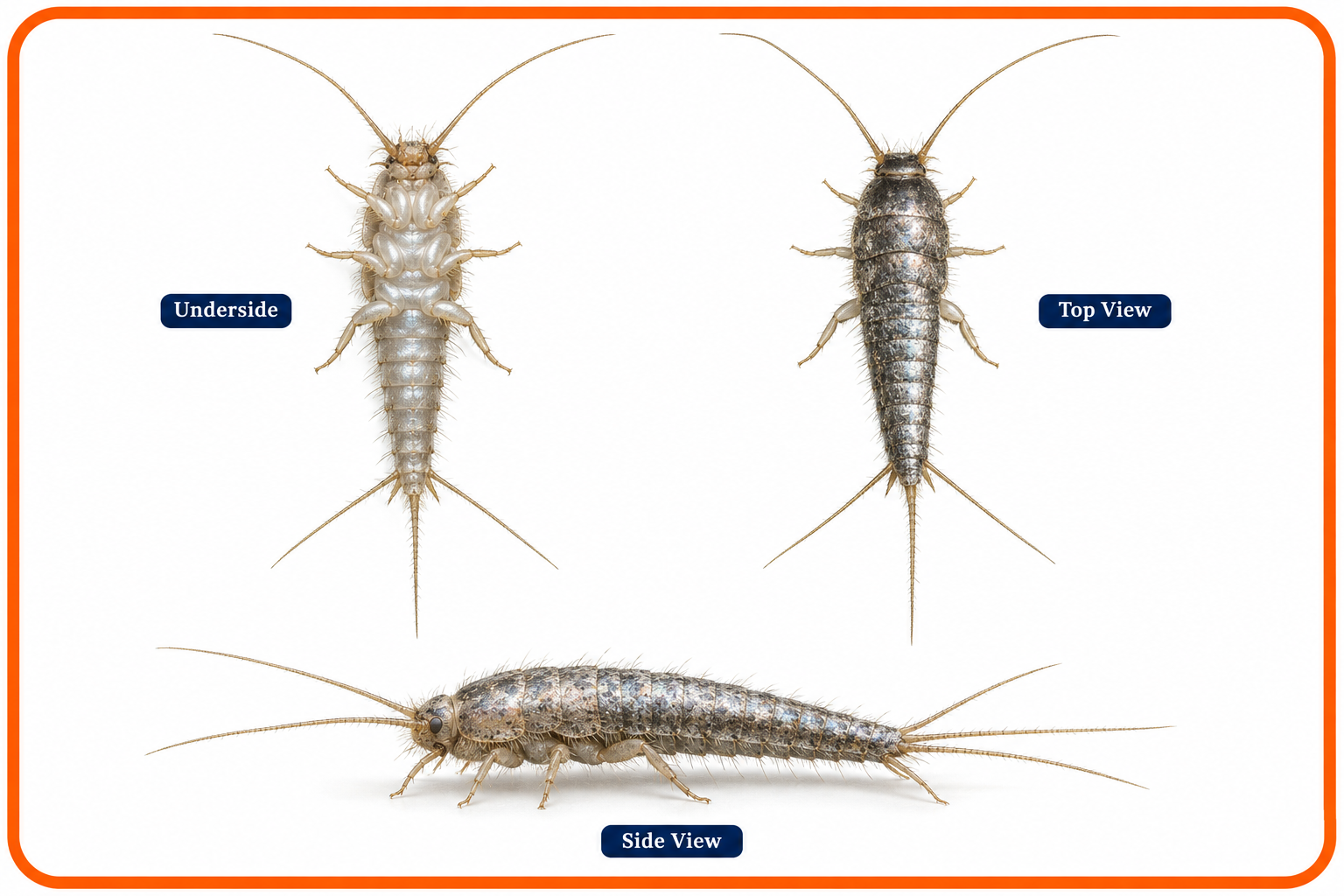
- Silvery gray
- Size
- Adults about ⅓–½ inch
- Key Markings
- Tapered body and three tail filaments
- Activity
- Mostly active at night
- Common Areas
- Damp storage, closets, bathrooms
Description
Order Zygentoma
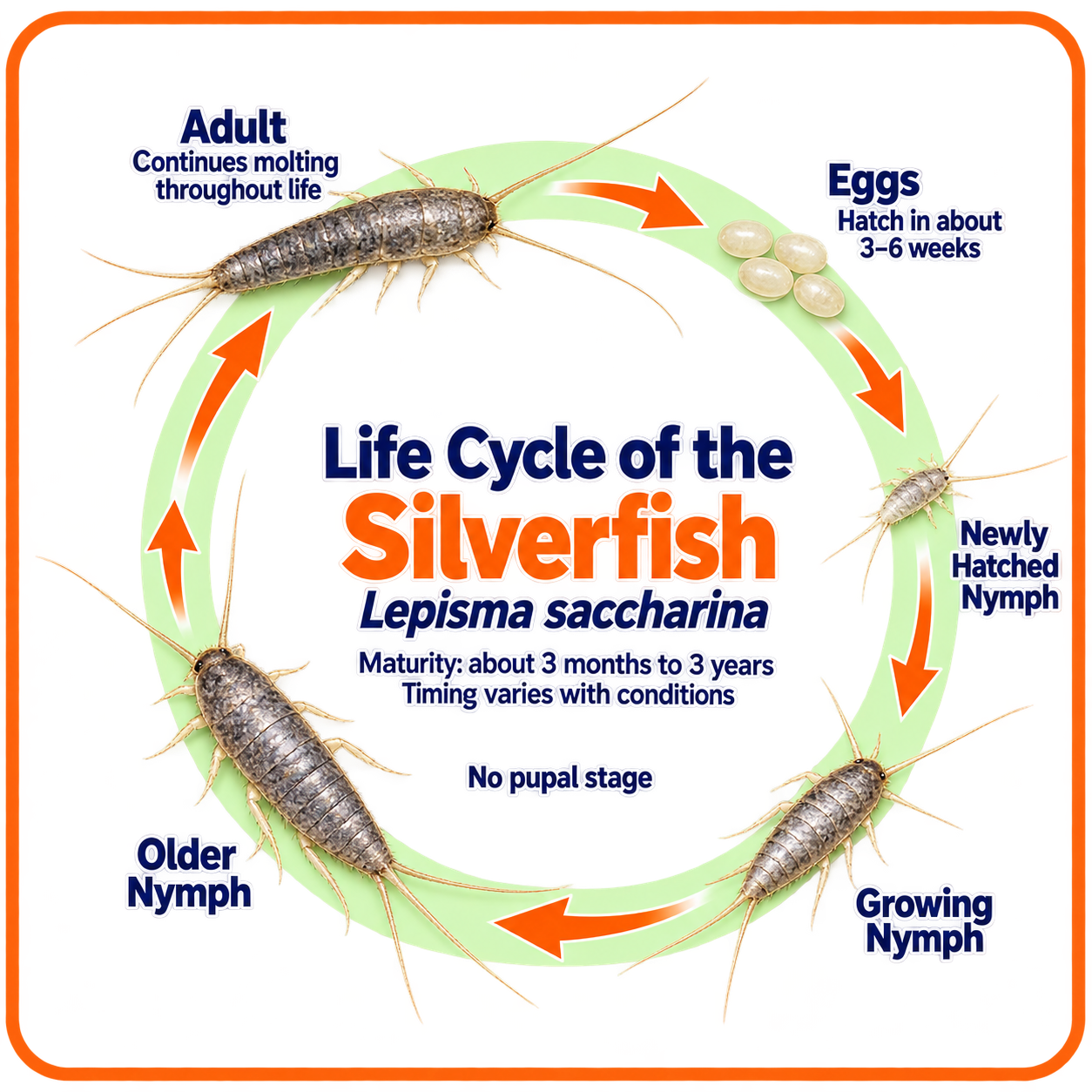
Silverfish are wingless insects with scales, long antennae, and three tail-like appendages. They hide in protected gaps and feed on materials containing starches, sugars, or proteins. Young resemble adults and develop gradually through molts, without a pupal stage.
What Attracts Them?
- High humidity and limited airflow
- Paper, paste, and starchy materials
- Undisturbed storage spaces
How Do They Get Inside?
- Infested stored materials
- Gaps around pipelines
- Openings into protected indoor spaces
Signs of an Infestation
Feeding damage to paper or bindings
Activity around damp shelving
Insects beneath stored items
How Serious or Harmful Are They?
Silverfish are mainly a material-damage concern. Their feeding can affect books, paper, and some fabrics; reducing moisture and protecting susceptible items helps limit damage.
Treatment / How to Get Rid of Them
What You Can Do
- Lower humidity and correct leaks
- Improve airflow in storage areas
- Protect books and fabrics from damp conditions
- Reduce clutter and inspect stored materials
How Pest Guys Helps

Assess — We inspect your property, identify pests and activity, locate nesting and hiding areas, and find contributing conditions.
Communicate — We explain our findings, discuss the recommended plan, answer your questions, and confirm understanding and agreement.
Treat — We put the agreed plan into action, perform the initial treatment, provide ongoing service, and monitor results to adjust as needed.
Frequently Asked Questions
What should I look for first?
Tapered body and three tail filaments. Fast-moving silvery insects. A clear photograph and the location of activity can help with identification.
What conditions should I check?
Start with high humidity and limited airflow. Lower humidity and correct leaks.
Does seeing one mean there is an infestation?
A single sighting does not establish the extent of a problem. Repeated activity, developing young, nests, or other evidence help us determine what is happening.
How does Pest Guys decide what to do?
We use A-C-T: Assess, Communicate, Treat. The pest, its location, and the conditions at your home guide the recommendation. We explain the plan and any preparation needed before service.
Comparisons With Similar Pests
Need help identifying a pest?
Tell us what you’re seeing. We’ll help determine the next step.