
Many-legged animals near thresholds
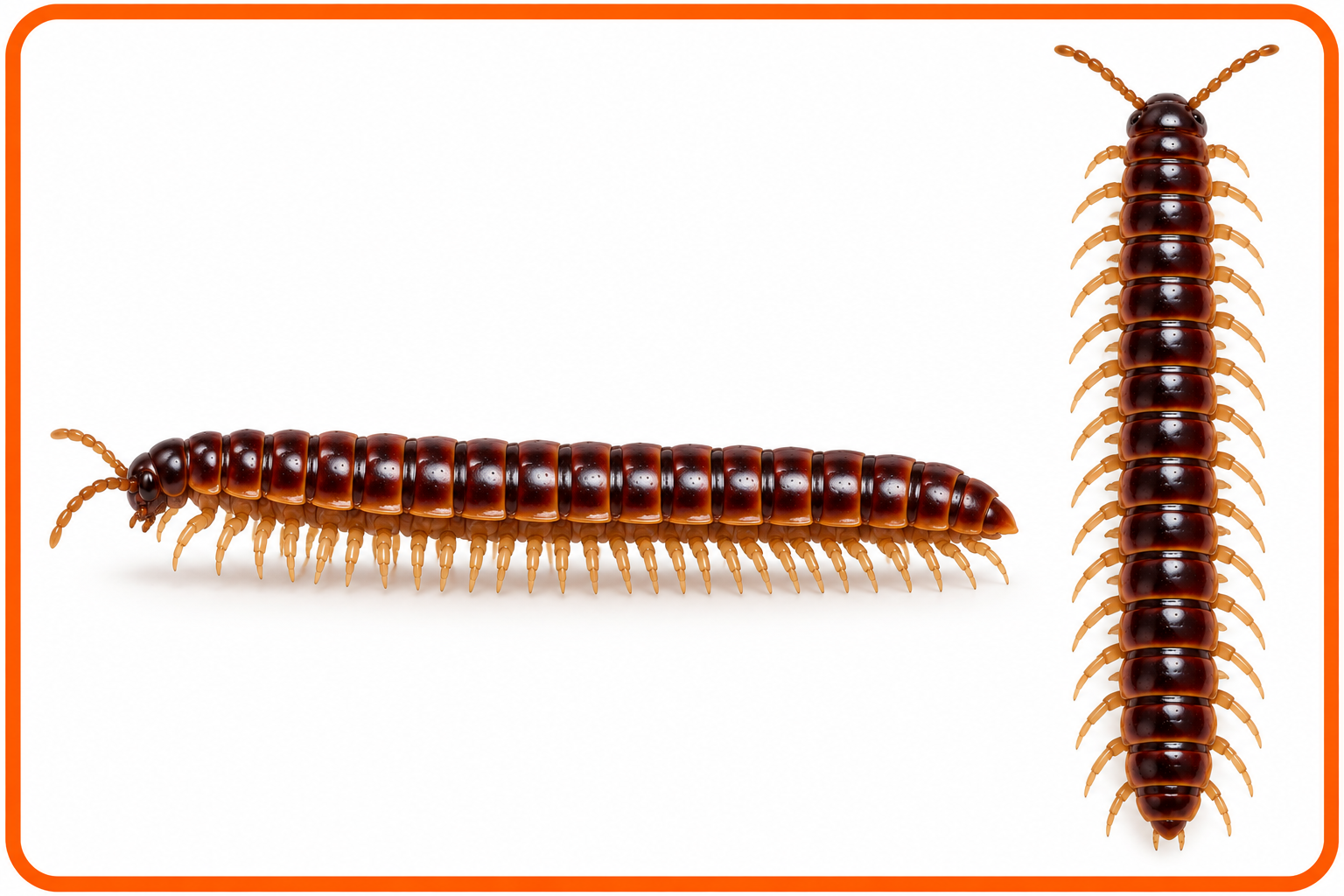
Greenhouse Millipede
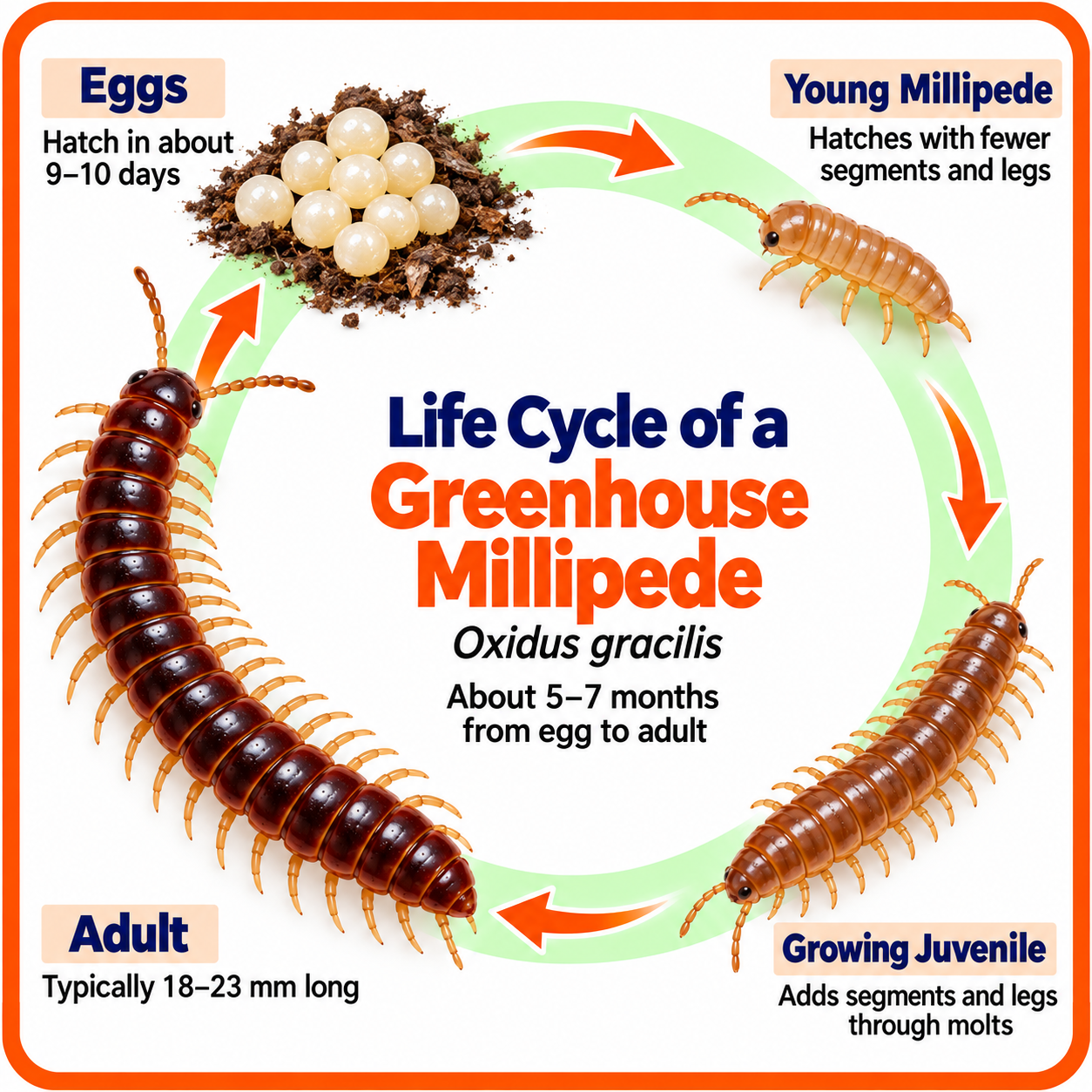
Life Cycle
- Color
- Brown body with paler legs
- Size
- Adults often about 18–23 mm
- Key Markings
- Many segments and short legs
- Activity
- Often moves in damp conditions
- Common Areas
- Mulch, leaf litter, moist shelter
Description
Oxidus gracilis
Greenhouse millipedes live in damp organic material and feed mainly on decomposing matter. They are not insects. Young hatch with fewer legs and segments, adding more as they grow. Heavy outdoor movement can bring them against foundations and through low openings.
What Attracts Them?
- Damp mulch and leaf litter
- Decaying organic material
- Protected moisture near walls
How Do They Get Inside?
- Gaps beneath doors
- Ground-level foundation openings
- Damp materials moved indoors
Signs of an Infestation
Movement after weather changes
Millipedes beneath outdoor debris
Dead or drying millipedes indoors
How Serious or Harmful Are They?
Indoor appearances are usually accidental. Millipedes do not sting; avoid crushing or handling them because defensive secretions may be irritating.
Treatment / How to Get Rid of Them
What You Can Do
- Reduce persistent moisture near foundations
- Move accumulated debris away from walls
- Maintain door sweeps and seal low gaps
- Remove indoor strays and assess outdoor conditions
How Pest Guys Helps

Assess — We inspect your property, identify pests and activity, locate nesting and hiding areas, and find contributing conditions.
Communicate — We explain our findings, discuss the recommended plan, answer your questions, and confirm understanding and agreement.
Treat — We put the agreed plan into action, perform the initial treatment, provide ongoing service, and monitor results to adjust as needed.
Frequently Asked Questions
What should I look for first?
Many segments and short legs. Many-legged animals near thresholds. A clear photograph and the location of activity can help with identification.
What conditions should I check?
Start with damp mulch and leaf litter. Reduce persistent moisture near foundations.
Does seeing one mean there is an infestation?
A single sighting does not establish the extent of a problem. Repeated activity, developing young, nests, or other evidence help us determine what is happening.
How does Pest Guys decide what to do?
We use A-C-T: Assess, Communicate, Treat. The pest, its location, and the conditions at your home guide the recommendation. We explain the plan and any preparation needed before service.
Comparisons With Similar Pests
Need help identifying a pest?
Tell us what you’re seeing. We’ll help determine the next step.