
Circular webs near vegetation
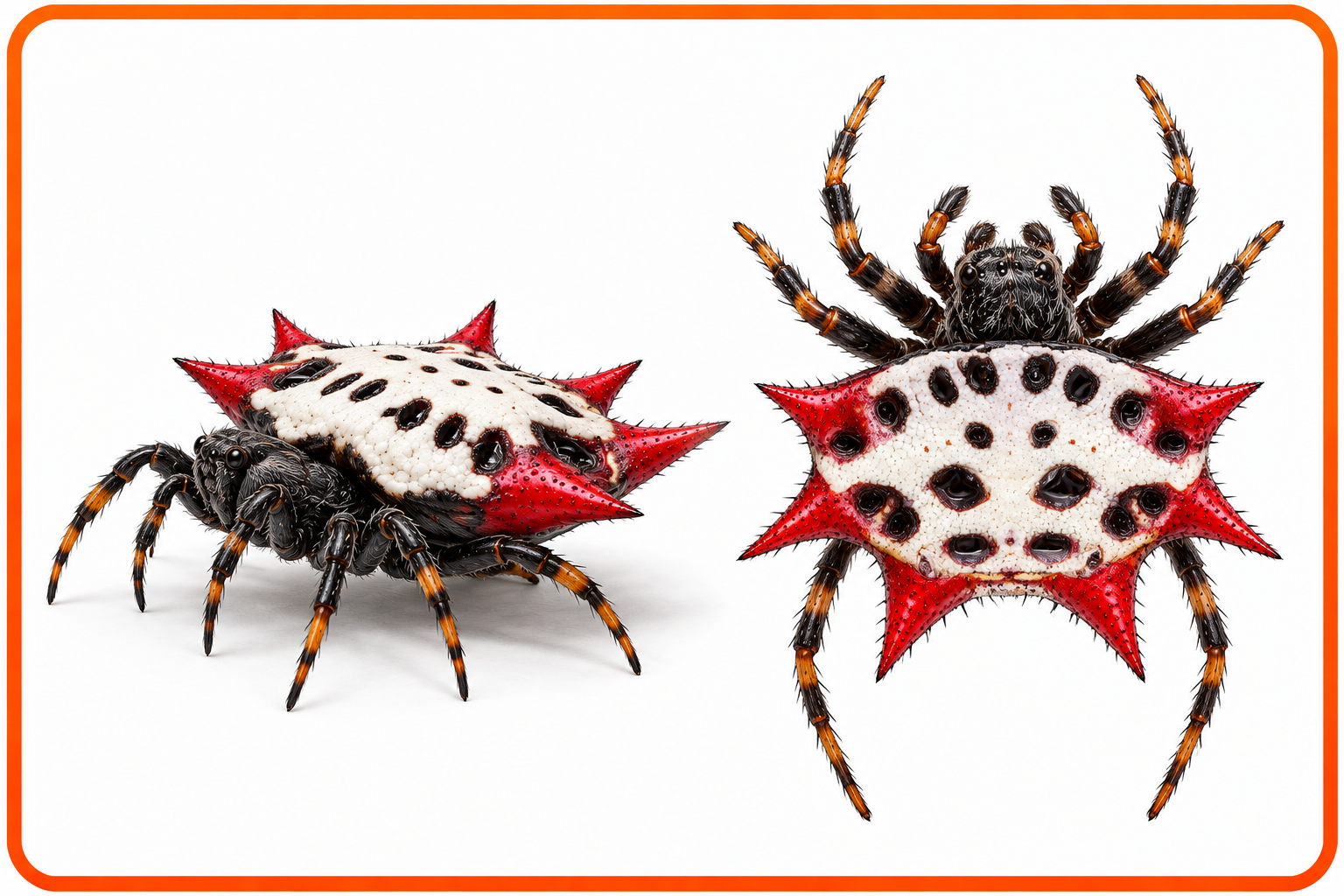
Spinybacked Orbweaver
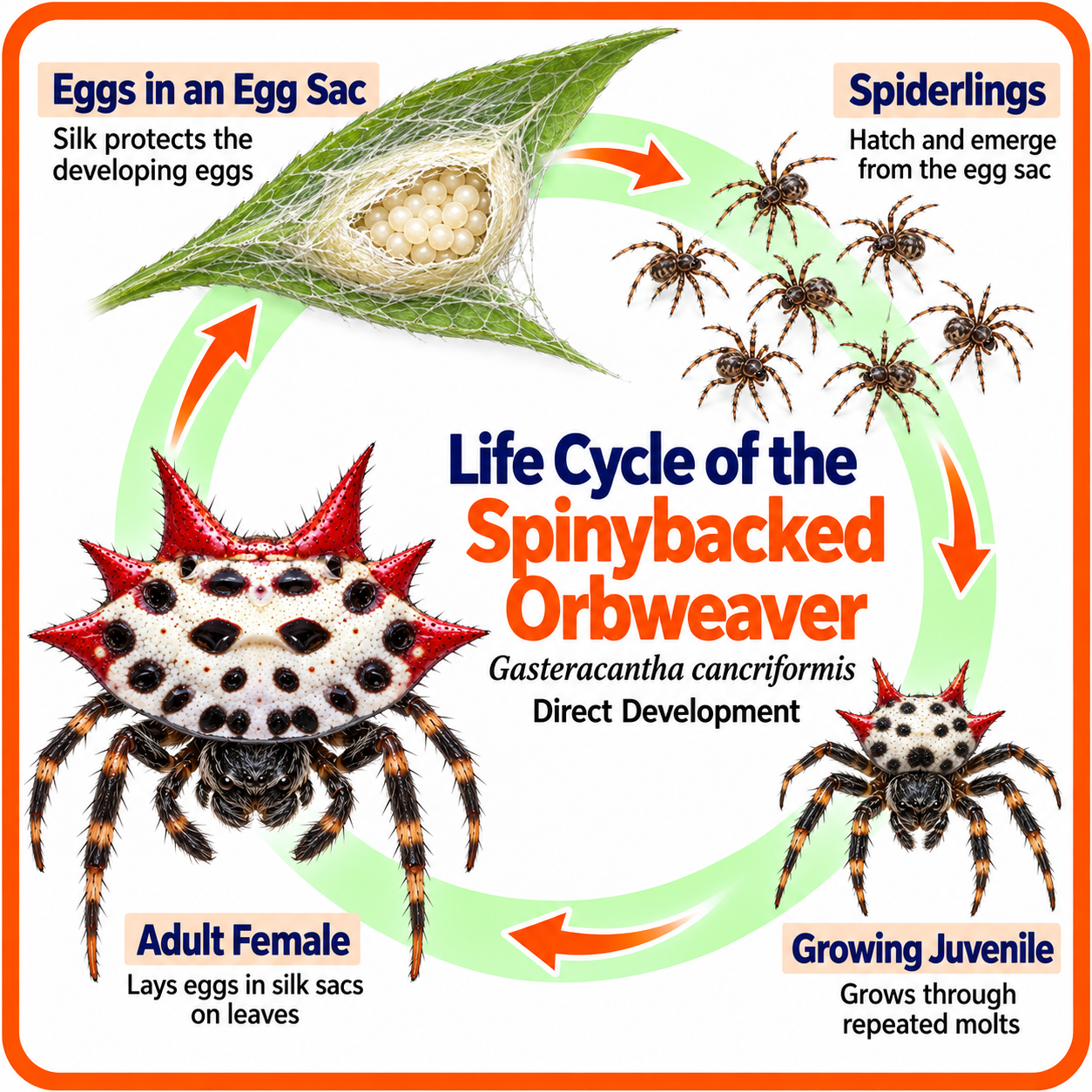
Life Cycle
- Color
- White, yellow, red, or black forms
- Size
- Females about 5–10 mm long
- Key Markings
- Broad abdomen with spines
- Activity
- Waits in an orb web
- Common Areas
- Shrubs, trees, exterior spaces
Description
Gasteracantha cancriformis
The spinybacked orbweaver has a broad, spined abdomen and builds a wheel-shaped web. Coloration varies. These spiders capture flying insects outdoors and are often noticed between shrubs or near buildings. Eggs are placed in silk sacs and young grow by molting.
Spiders develop from eggs to spiderlings and adults through repeated molts. They do not pass through insect larval or pupal stages.
What Attracts Them?
- Flying insects
- Vegetation supporting webs
- Sheltered outdoor web locations
How Do They Get Inside?
- Usually remains outdoors
- May be carried on objects
- Occasional entry through open doors
Signs of an Infestation
Spined spiders at web centers
Webs rebuilt in favored locations
Silk lines between nearby supports
How Serious or Harmful Are They?
This is generally a beneficial outdoor spider. UF/IFAS reports no known serious effects from its bite. Web placement may still be inconvenient near walkways or entrances.
Treatment / How to Get Rid of Them
What You Can Do
- Leave undisturbed spiders away from activity areas
- Remove accessible webs where needed
- Reduce insect attraction near entries
- Keep vegetation from blocking pathways
How Pest Guys Helps

Assess — We inspect your property, identify pests and activity, locate nesting and hiding areas, and find contributing conditions.
Communicate — We explain our findings, discuss the recommended plan, answer your questions, and confirm understanding and agreement.
Treat — We put the agreed plan into action, perform the initial treatment, provide ongoing service, and monitor results to adjust as needed.
Frequently Asked Questions
What should I look for first?
Broad abdomen with spines. Circular webs near vegetation. A clear photograph and the location of activity can help with identification.
What conditions should I check?
Start with flying insects. Leave undisturbed spiders away from activity areas.
Does seeing one mean there is an infestation?
A single sighting does not establish the extent of a problem. Repeated activity, developing young, nests, or other evidence help us determine what is happening.
How does Pest Guys decide what to do?
We use A-C-T: Assess, Communicate, Treat. The pest, its location, and the conditions at your home guide the recommendation. We explain the plan and any preparation needed before service.
Comparisons With Similar Pests
Need help identifying a pest?
Tell us what you’re seeing. We’ll help determine the next step.