
Open paper comb beneath eaves
Paper Wasp
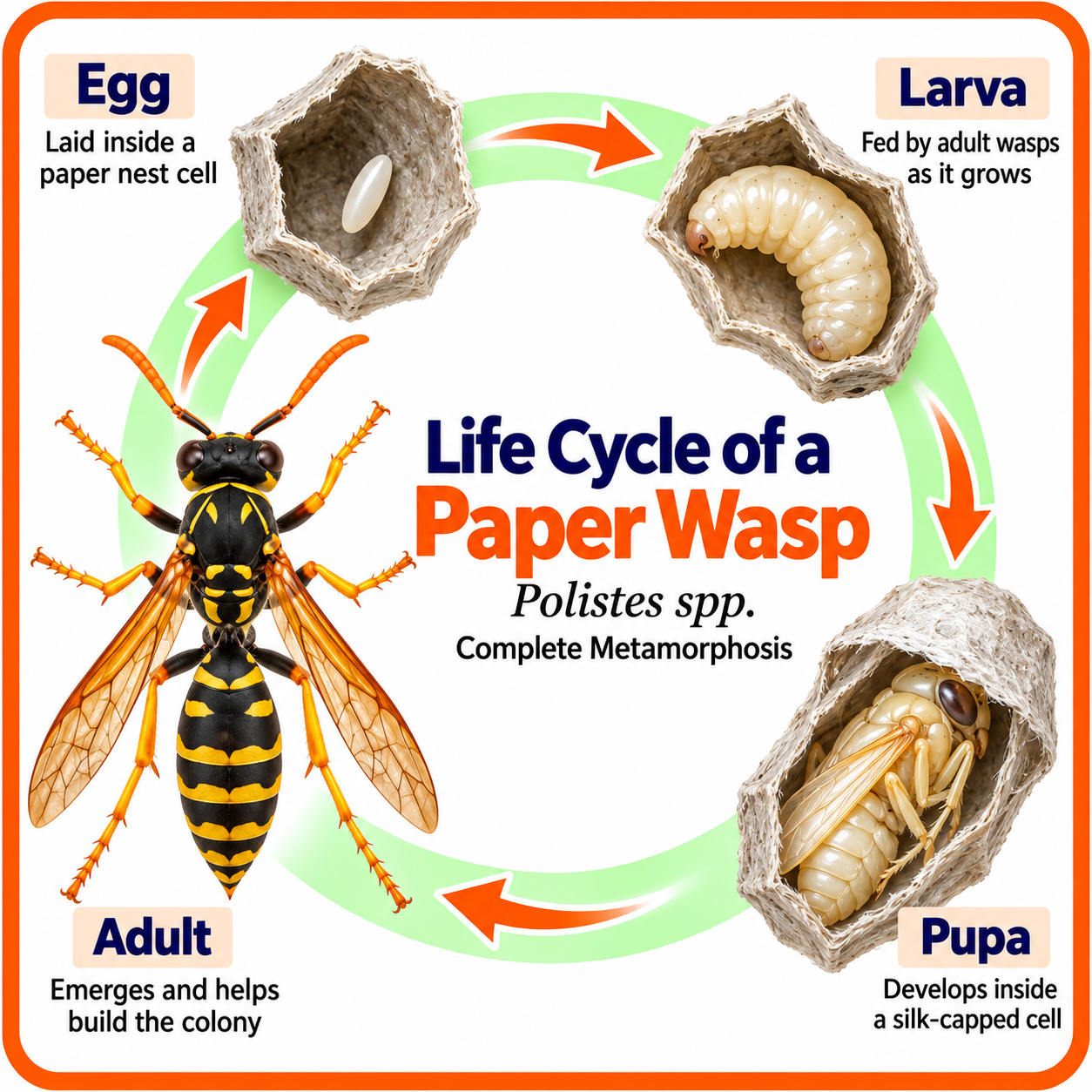
Life Cycle
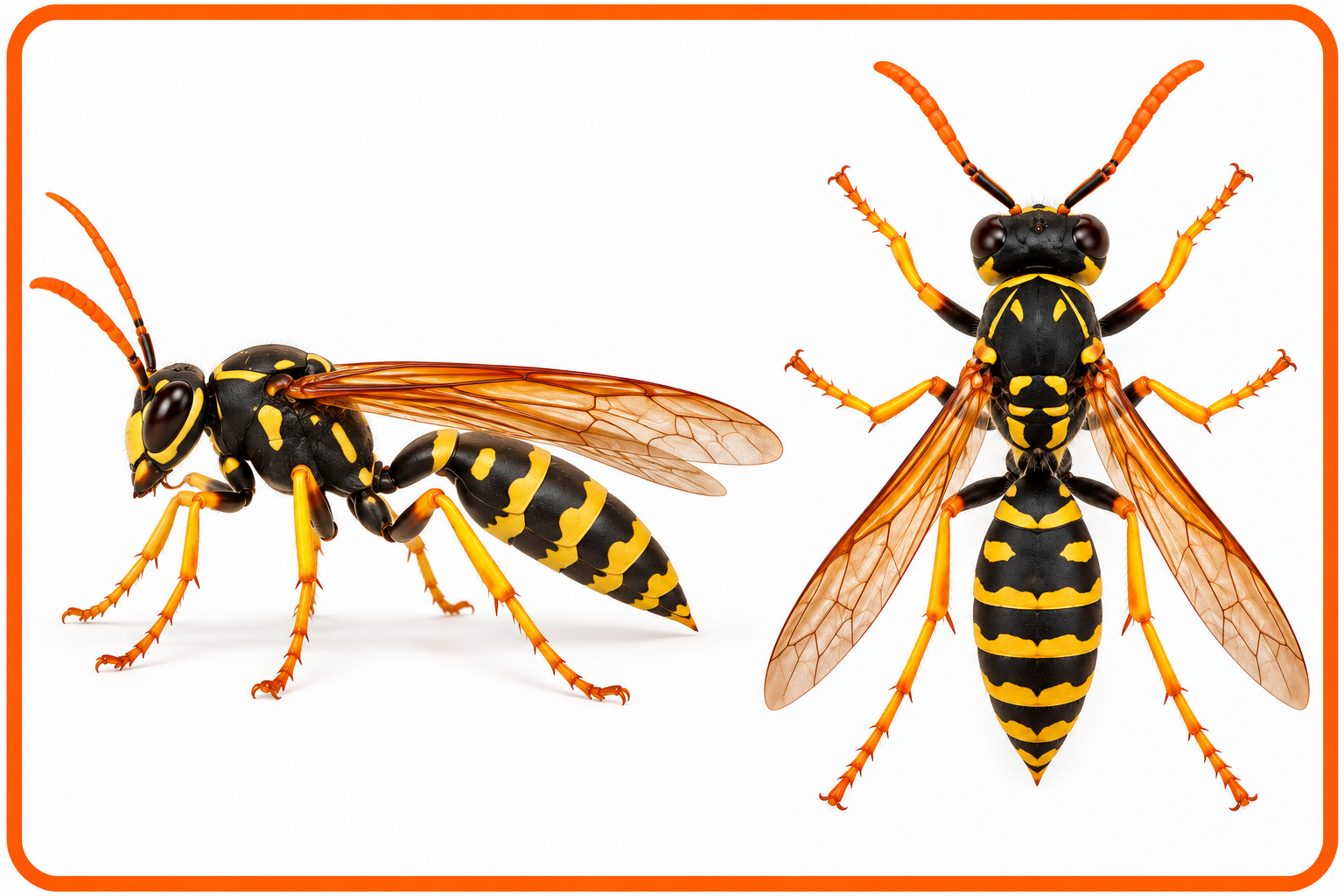
- Color
- Often brown or black with yellow
- Size
- Adults commonly about ¾–1 inch
- Key Markings
- Slender waist and long legs
- Activity
- Daytime nest activity
- Common Areas
- Eaves, porches, sheltered supports
Description
Polistes spp.
Paper wasps build open combs with visible cells, often attached beneath sheltered surfaces. Adults collect materials for the nest and feed insect prey to their larvae. Eggs, larvae, and pupae develop in the nest cells before adults emerge. Appearance varies among species.
What Attracts Them?
- Sheltered nest supports
- Caterpillars and other insect prey
- Water and suitable nest-building material
How Do They Get Inside?
- Open doors or unscreened windows
- Gaps into sheltered spaces
- Accidental entry from a nearby nest
Signs of an Infestation
Wasps returning to one location
Adults tending visible cells
Increasing traffic near an entry
How Serious or Harmful Are They?
Paper wasps can sting when the nest is disturbed. Keep a safe distance from active nests, particularly near doors, play areas, or places where people work.
Treatment / How to Get Rid of Them
What You Can Do
- Do not knock down an occupied nest
- Keep children and pets away
- Observe the location from a safe distance
- Request an assessment of nests near activity areas
How Pest Guys Helps
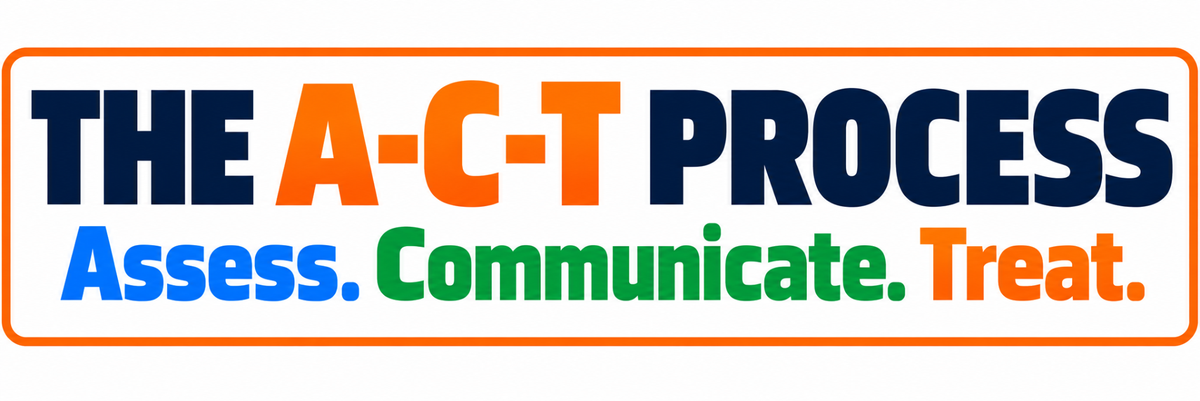
Assess — We inspect your property, identify pests and activity, locate nesting and hiding areas, and find contributing conditions.
Communicate — We explain our findings, discuss the recommended plan, answer your questions, and confirm understanding and agreement.
Treat — We put the agreed plan into action, perform the initial treatment, provide ongoing service, and monitor results to adjust as needed.
Frequently Asked Questions
What should I look for first?
Slender waist and long legs. Open paper comb beneath eaves. A clear photograph and the location of activity can help with identification.
What conditions should I check?
Start with sheltered nest supports. Do not knock down an occupied nest.
Does seeing one mean there is an infestation?
A single sighting does not establish the extent of a problem. Repeated activity, developing young, nests, or other evidence help us determine what is happening.
How does Pest Guys decide what to do?
We use A-C-T: Assess, Communicate, Treat. The pest, its location, and the conditions at your home guide the recommendation. We explain the plan and any preparation needed before service.
Comparisons With Similar Pests
Not sure which pest you have? Return to the Pest Library or ask us to help identify it before selecting a treatment approach.
Need help identifying a pest?
Tell us what you’re seeing. We’ll help determine the next step.