
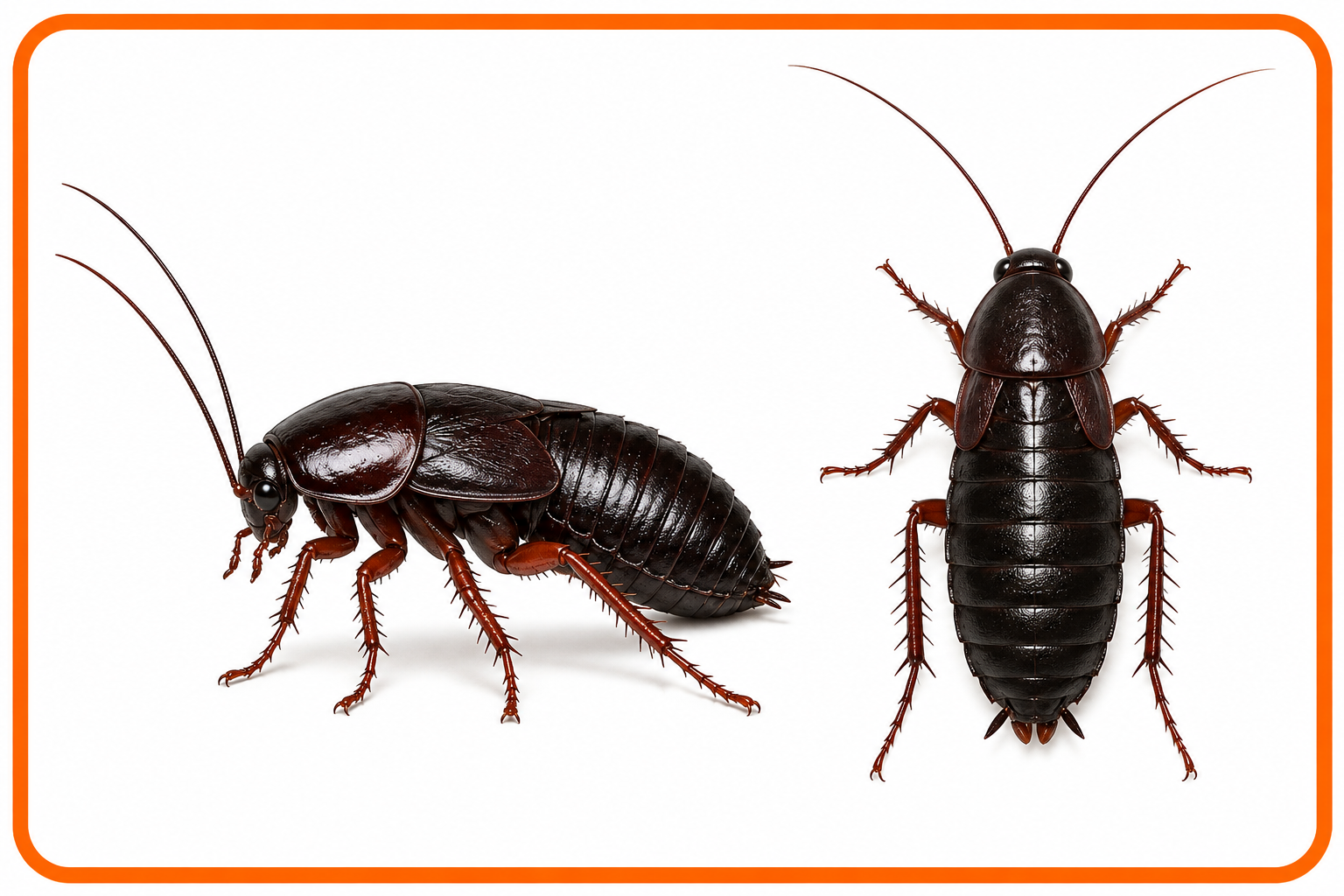
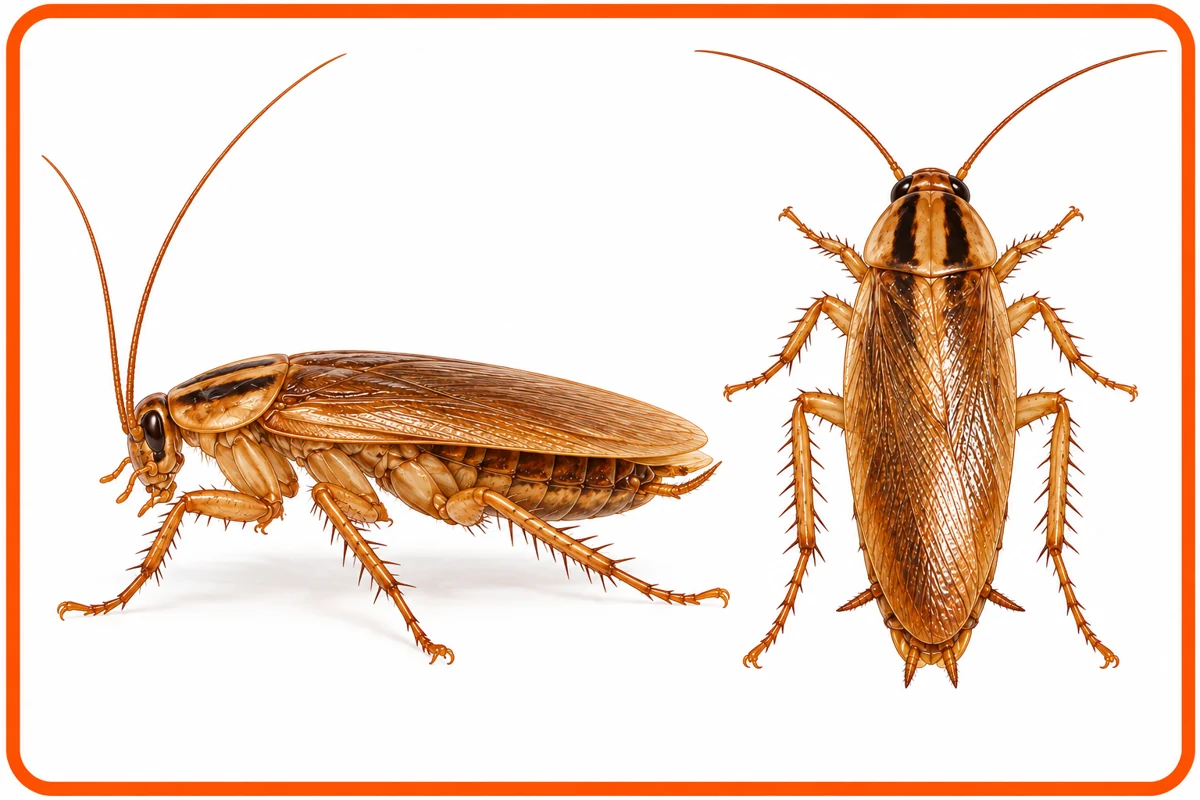
Dark roaches near ground level
Oriental Cockroach
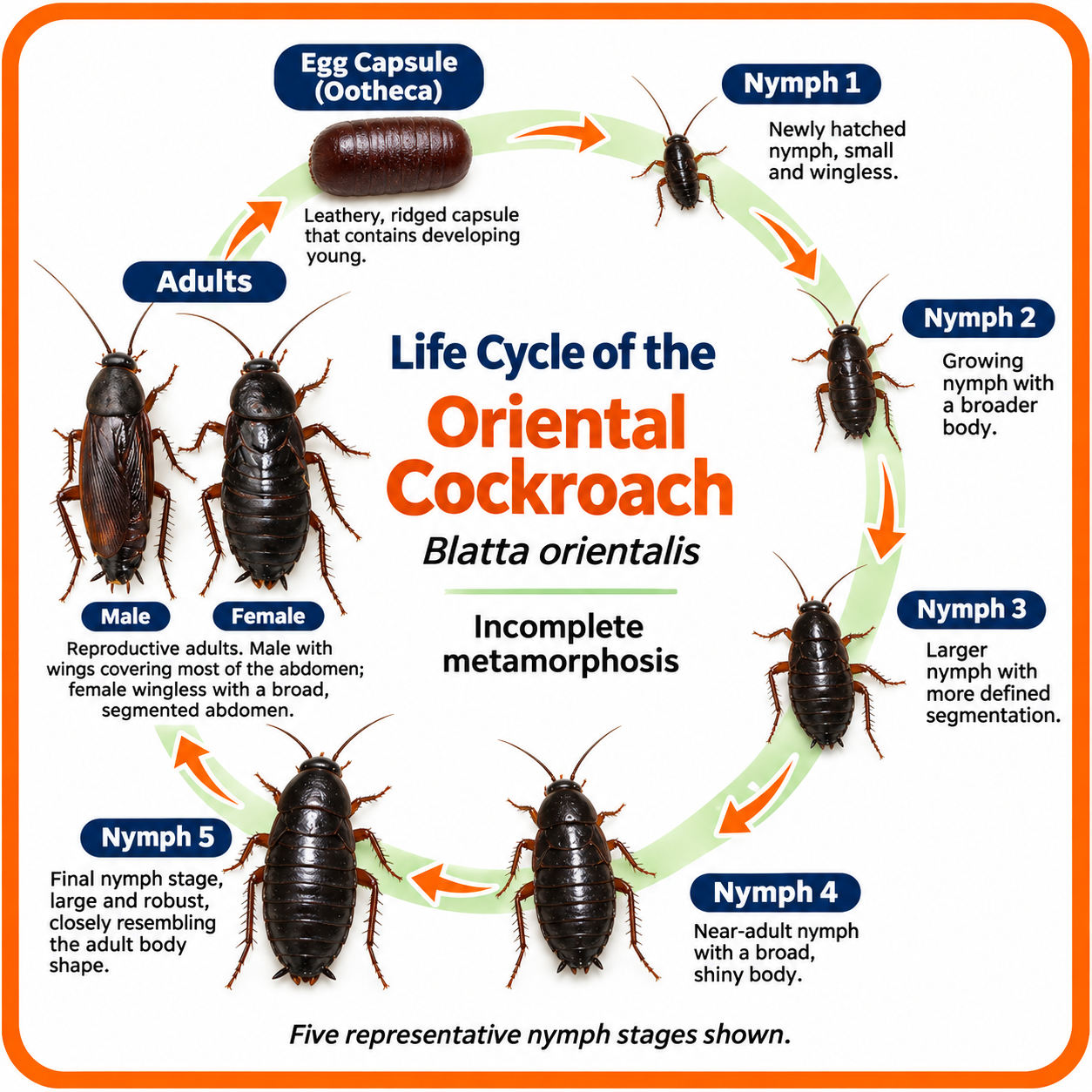
Life Cycle
- Color
- Dark brown to nearly black
- Size
- Adults about ¾–1¼ inches
- Key Markings
- Shiny body; reduced wings
- Activity
- Mostly active at night
- Common Areas
- Cool, damp ground-level areas
Description
Blatta orientalis
Oriental roaches prefer dark, damp places. They may be associated with drains, crawl spaces, and sheltered ground-level areas. Adults do not fly. Females have very short wings, while male wings leave part of the abdomen exposed. Development includes eggs, nymphs, and adults.
Roaches develop through egg, nymph, and adult stages. Nymphs grow through repeated molts; there is no pupal stage.
What Attracts Them?
- Persistent moisture
- Decaying organic matter
- Dark protected shelter
How Do They Get Inside?
- Gaps beneath doors
- Utility and foundation openings
- Connections to damp drain areas
Signs of an Infestation
Activity around damp storage
Egg cases in sheltered spaces
Roaches in sinks or tubs
How Serious or Harmful Are They?
Their contact with unsanitary places makes contamination a concern. Moisture correction and entry-point inspection are important parts of managing repeated activity.
Treatment / How to Get Rid of Them
What You Can Do
- Fix leaks and improve drainage
- Keep debris away from foundations
- Maintain door sweeps
- Inspect plumbing and utility openings
How Pest Guys Helps

Assess — We inspect your property, identify pests and activity, locate nesting and hiding areas, and find contributing conditions.
Communicate — We explain our findings, discuss the recommended plan, answer your questions, and confirm understanding and agreement.
Treat — We put the agreed plan into action, perform the initial treatment, provide ongoing service, and monitor results to adjust as needed.
Frequently Asked Questions
What should I look for first?
Shiny body; reduced wings. Dark roaches near ground level. A clear photograph and the location of activity can help with identification.
What conditions should I check?
Start with persistent moisture. Fix leaks and improve drainage.
Does seeing one mean there is an infestation?
A single sighting does not establish the extent of a problem. Repeated activity, developing young, nests, or other evidence help us determine what is happening.
How does Pest Guys decide what to do?
We use A-C-T: Assess, Communicate, Treat. The pest, its location, and the conditions at your home guide the recommendation. We explain the plan and any preparation needed before service.
Comparisons With Similar Pests
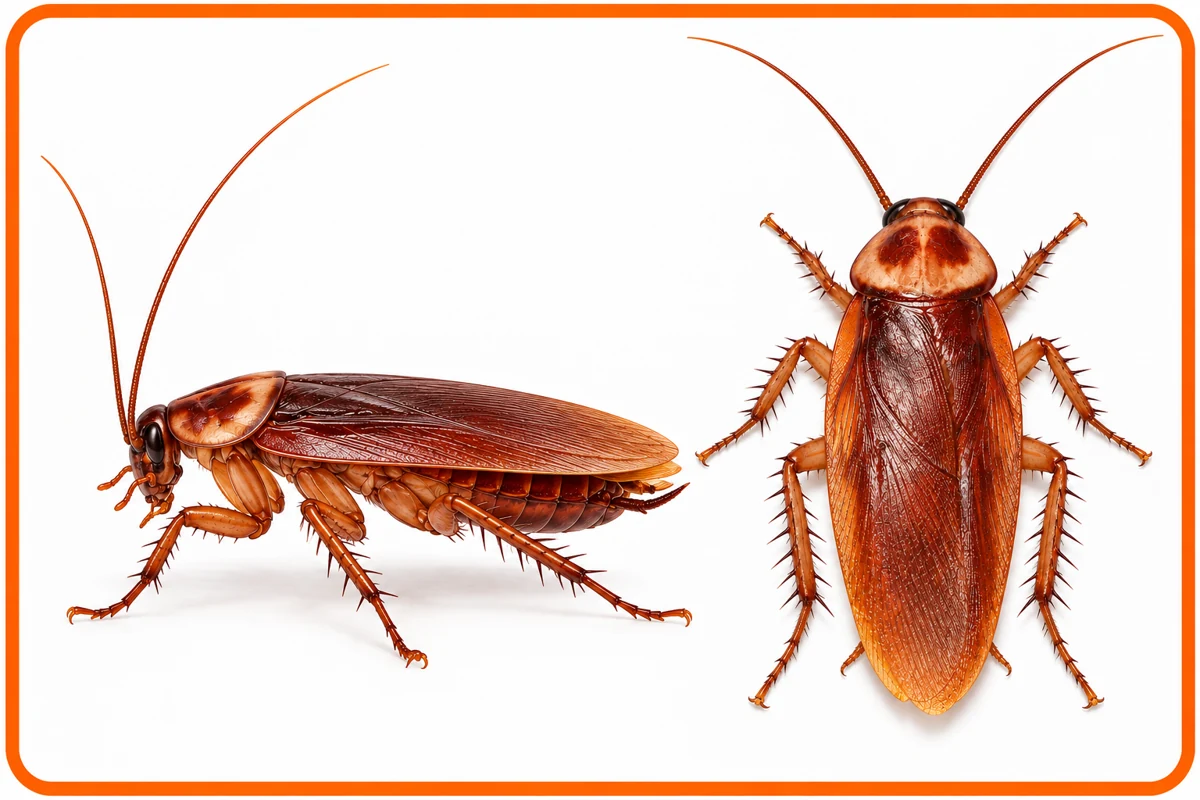
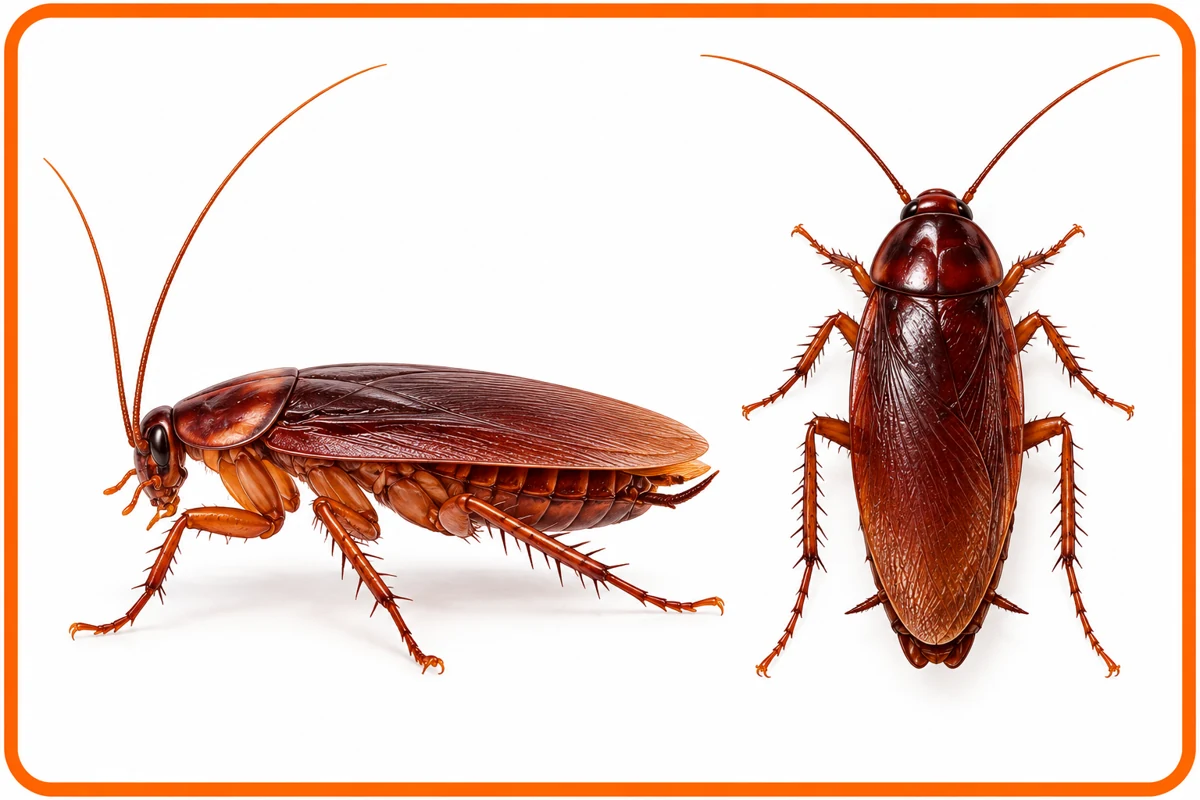
Need help identifying a pest?
Tell us what you’re seeing. We’ll help determine the next step.