
Burrows near structures
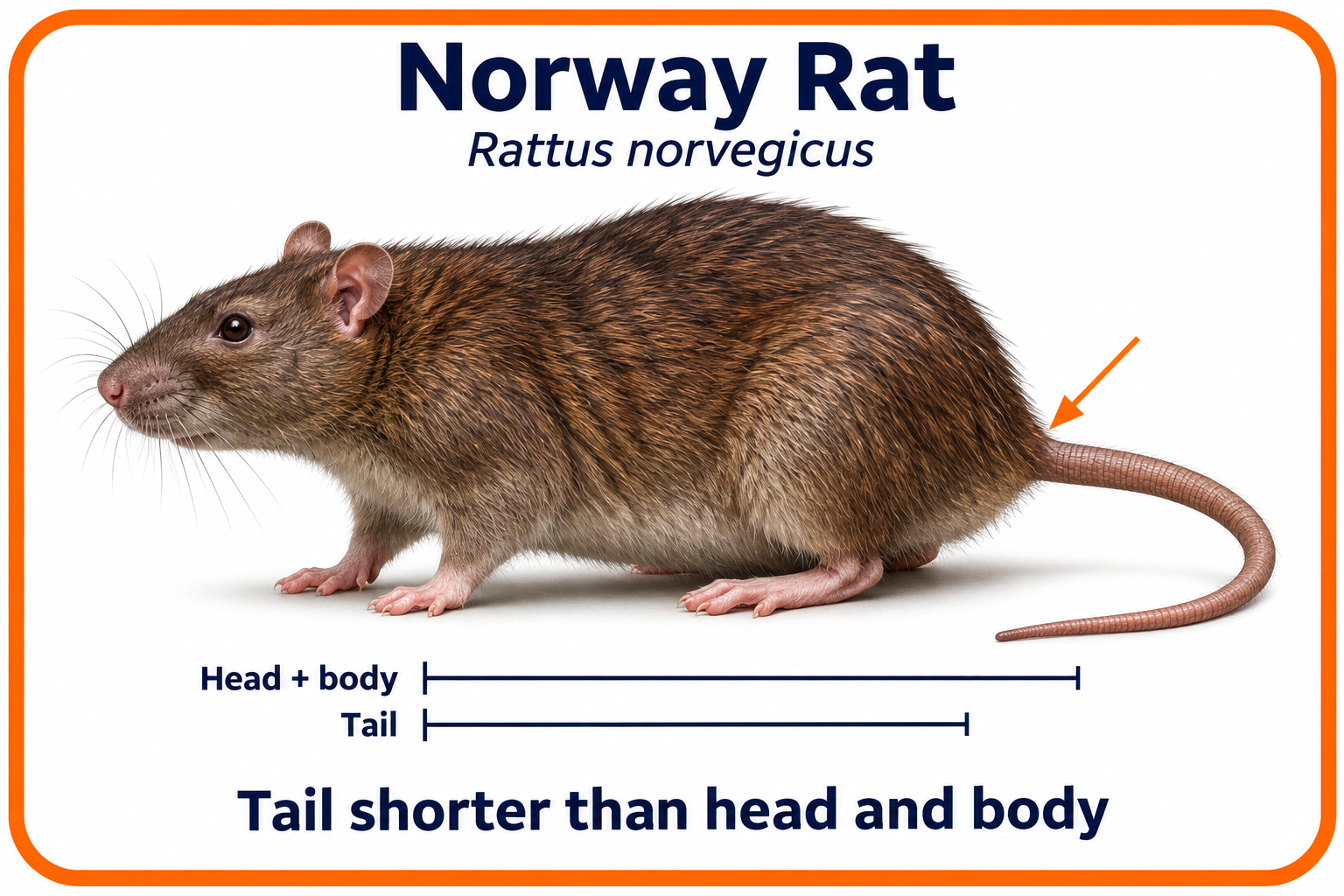
Norway Rat
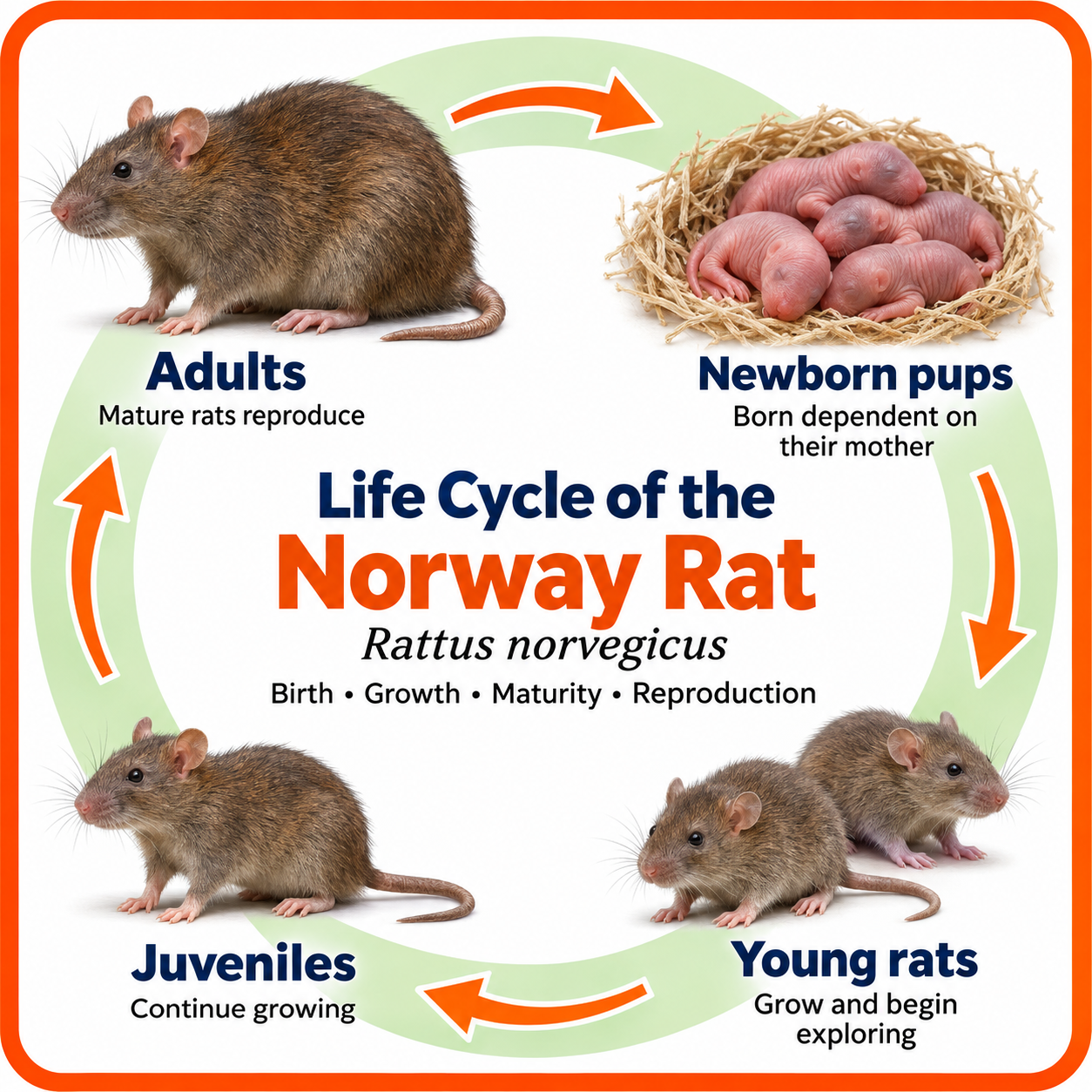
Life Cycle
- Color
- Grayish brown
- Size
- Larger, stockier rat
- Key Markings
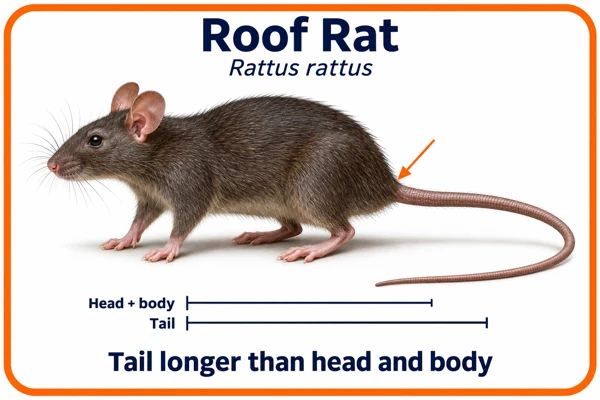
- Blunt muzzle; shorter tail than body + head
- Activity
- Usually active at night
- Common Areas
- Burrows and lower building areas
Description
Rattus norvegicus
Norway rats have a heavy build and a tail shorter than their combined head and body length. They commonly shelter in burrows near foundations, debris, and stored materials. They eat a broad range of foods, including discarded food, grains, meat, and fish. Pups develop through growth and maturity rather than insect-style metamorphosis.
What Attracts Them?
- Unsecured trash and food scraps
- Clutter and sheltered ground cover
- Accessible water
How Do They Get Inside?
- Foundation and door gaps
- Damaged vents and structural openings
- Plumbing-related access points
Signs of an Infestation
Droppings along routes
Gnawing on stored materials
Dark rub marks
How Serious or Harmful Are They?
Rodent activity can contaminate food and damage property through gnawing. Address signs promptly. Avoid handling rodents or contaminated material with bare hands, and do not dry-sweep or vacuum droppings.
Treatment / How to Get Rid of Them
What You Can Do
- Secure food and trash; remove clutter
- Repair leaks and reduce shelter near the home
- Have entry gaps assessed and corrected with gnaw-resistant materials
- Keep control devices away from children and pets
How Pest Guys Helps

Assess — We inspect your property, identify pests and activity, locate nesting and hiding areas, and find contributing conditions.
Communicate — We explain our findings, discuss the recommended plan, answer your questions, and confirm understanding and agreement.
Treat — We put the agreed plan into action, perform the initial treatment, provide ongoing service, and monitor results to adjust as needed.
Frequently Asked Questions
Do Norway rats always stay on the ground?
They tend to favor lower areas and burrows, but can also occupy ceiling spaces.
Is the tail a useful identification clue?
Yes. A Norway rat’s tail is shorter than its head and body combined. Use this alongside its stocky build and blunt muzzle.
Why does trapping need follow-up?
We reassess activity and access points so the plan addresses both rodents inside and routes that permit continued entry.
Comparisons With Similar Rodents
Factual References
Written in our own words using university Extension guidance.
Need Help With Rodent Activity?
Explore Rodent Control & Exclusion →
Request Service