
Live Roaches
Activity near cabinets or appliances, especially after dark.
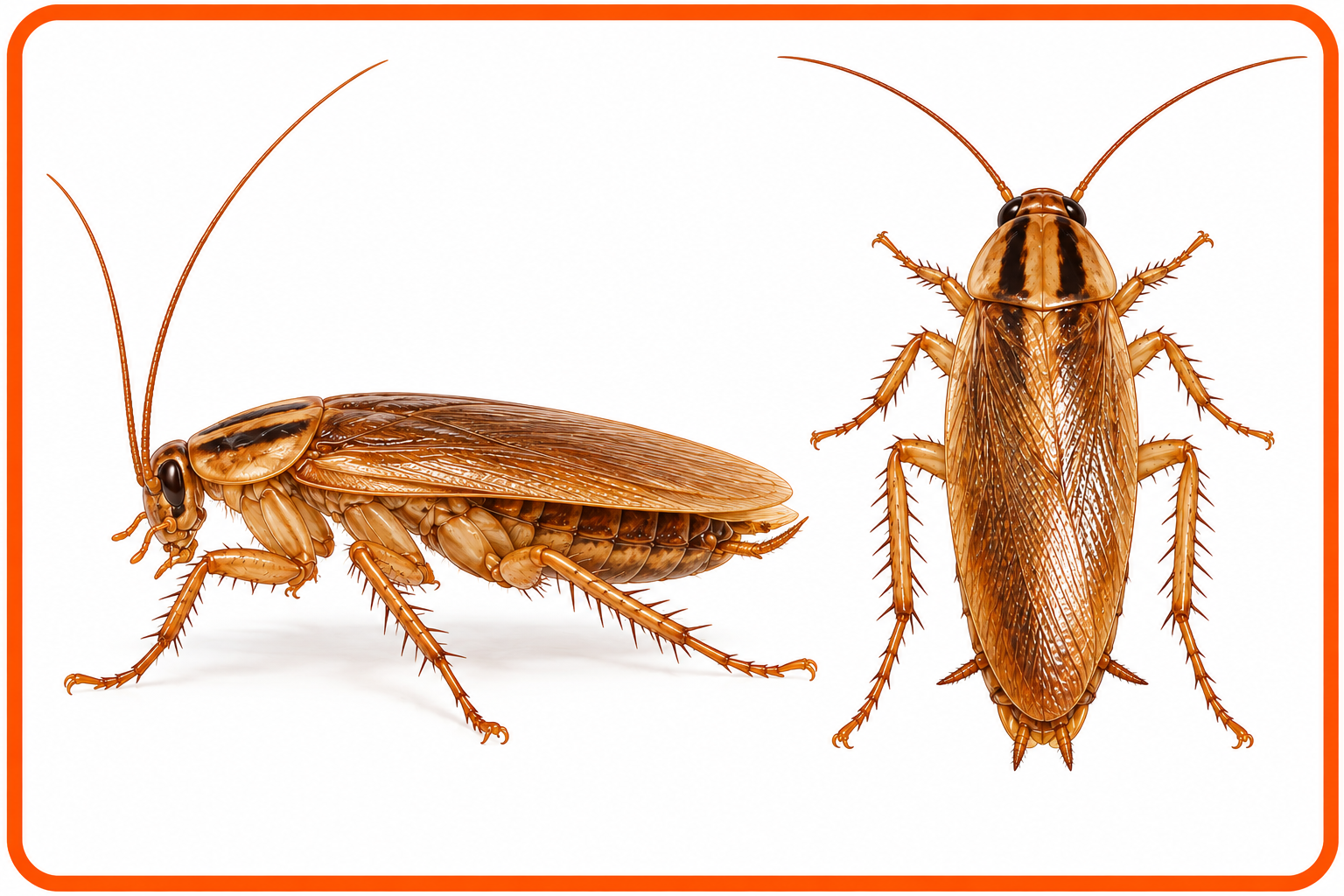
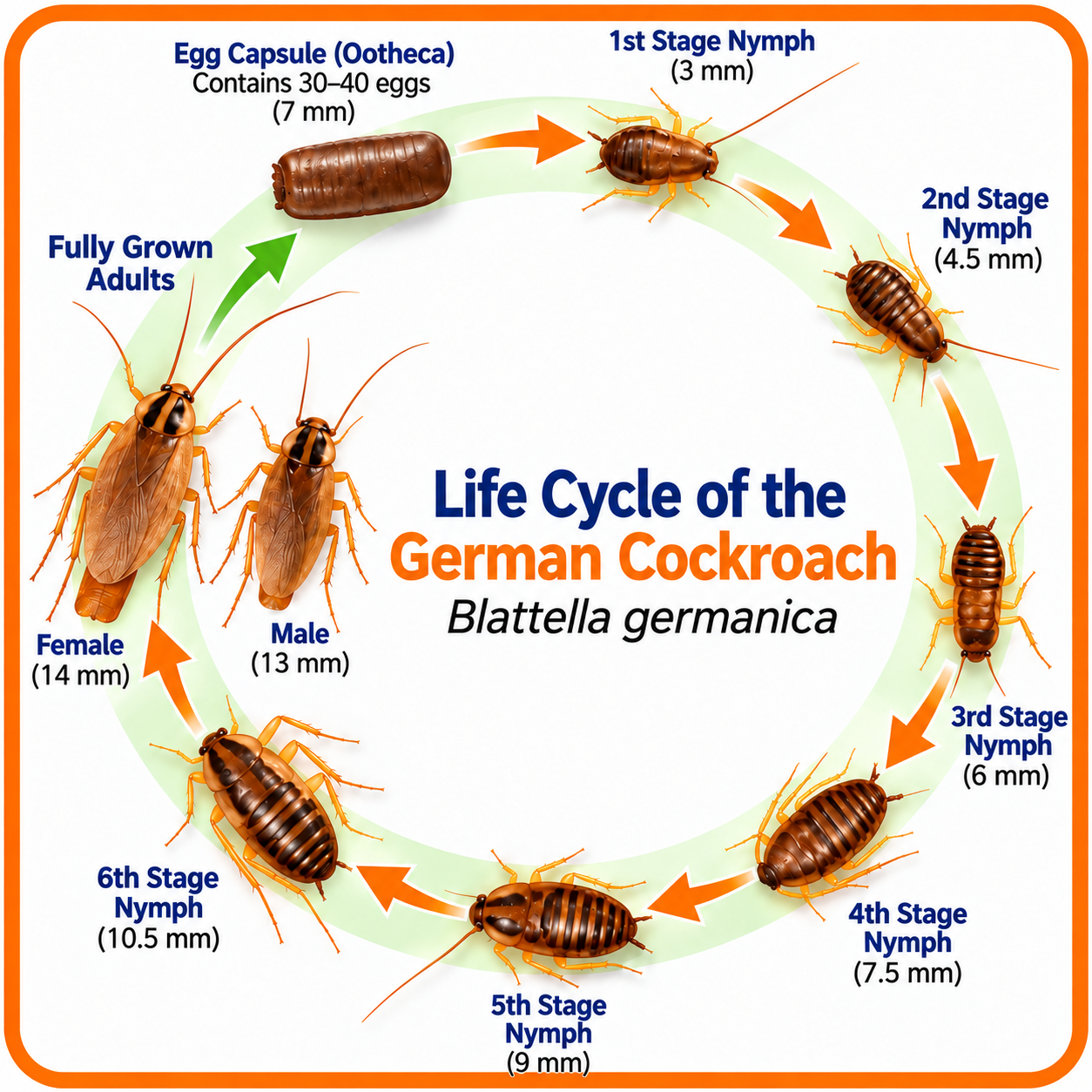
Blattella germanica is a small indoor roach that favors warm, humid hiding places close to food and water. Its flattened body fits into narrow gaps around cabinets, appliances, and plumbing. Adults have wings but generally run rather than fly.
German roaches eat a wide range of food residues. They develop through incomplete metamorphosis: egg, nymph, and adult. Nymphs resemble smaller, wingless adults and molt as they grow. Females carry an egg capsule until shortly before the young hatch, helping protect the developing eggs.
Small amounts of food and moisture can support activity when sheltered hiding places are nearby.
German roaches often arrive as hitchhikers. Once introduced, they can spread through connected indoor spaces.
Activity near cabinets or appliances, especially after dark.
Small, dark specks collecting close to hiding places.
Small, tan to brown cases that hold developing eggs.
Cast skins and dark spots or smears around protected gaps.
German roaches can contaminate food and food-contact surfaces. Material from roaches, including droppings and shed skins, can contribute to indoor allergens and may trigger reactions in sensitive people.
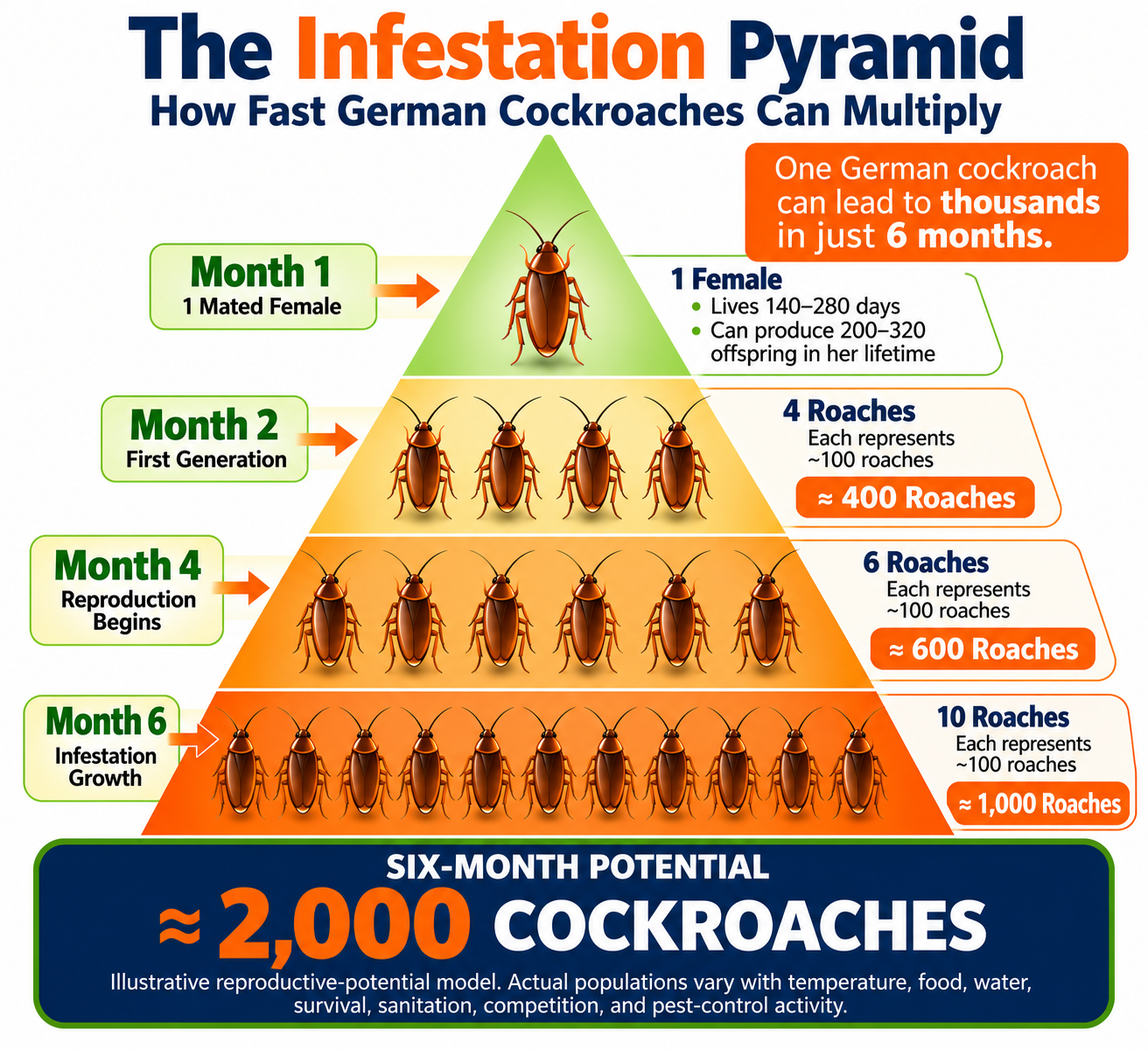
Because they reproduce indoors and hide in small spaces, the roaches you see may represent only part of the population. Early identification and monitoring help reveal where activity is concentrated.
Egg cases, hidden nymphs, and adults can be present together. Reducing visible activity is one step; checking for continued development helps evaluate progress.

Assess — We inspect your property, identify pests and activity, locate nesting and hiding areas, and find contributing conditions.
Communicate — We explain our findings, discuss the recommended plan, answer your questions, and confirm understanding and agreement.
Treat — We put the agreed plan into action, perform the initial treatment, provide ongoing service, and monitor results to adjust as needed.
Look close to food, water, and warmth—particularly kitchens, bathrooms, cabinets, and the spaces under or behind appliances. Larger infestations can spread to other rooms.
Yes. They can arrive in infested packaging, appliances, electronics, or belongings. Cleaning and moisture correction reduce resources available to them, but their presence does not by itself explain how they arrived.
Adults have wings, but they normally move by running. A small roach that flies readily may be another species, so identification is important.
Cleaning supports control by removing food and hiding places, but an established infestation often needs a coordinated treatment and monitoring plan.
Hidden roaches and developing young may remain active while treatment takes effect. We assess progress through changing activity and monitoring rather than expecting every roach to disappear immediately.
Preparation depends on the areas involved and the treatment plan. Pest Guys will explain what access or preparation is needed for your service.
These roaches can also be found around Florida homes. Their appearance helps distinguish them from the smaller, striped German roach.
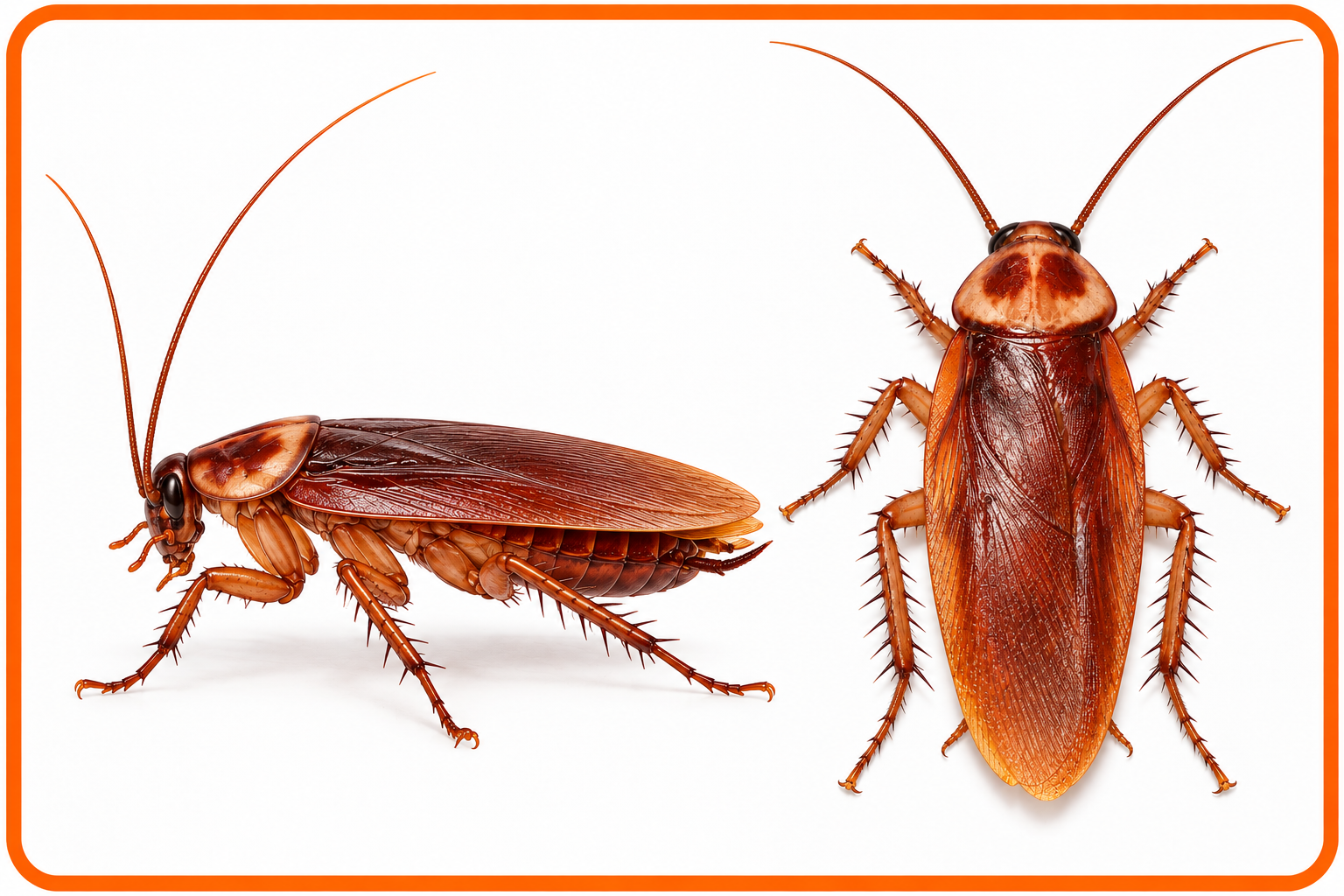
Much larger as an adult, with reddish-brown coloring and a pale margin on the shield behind the head.
Click here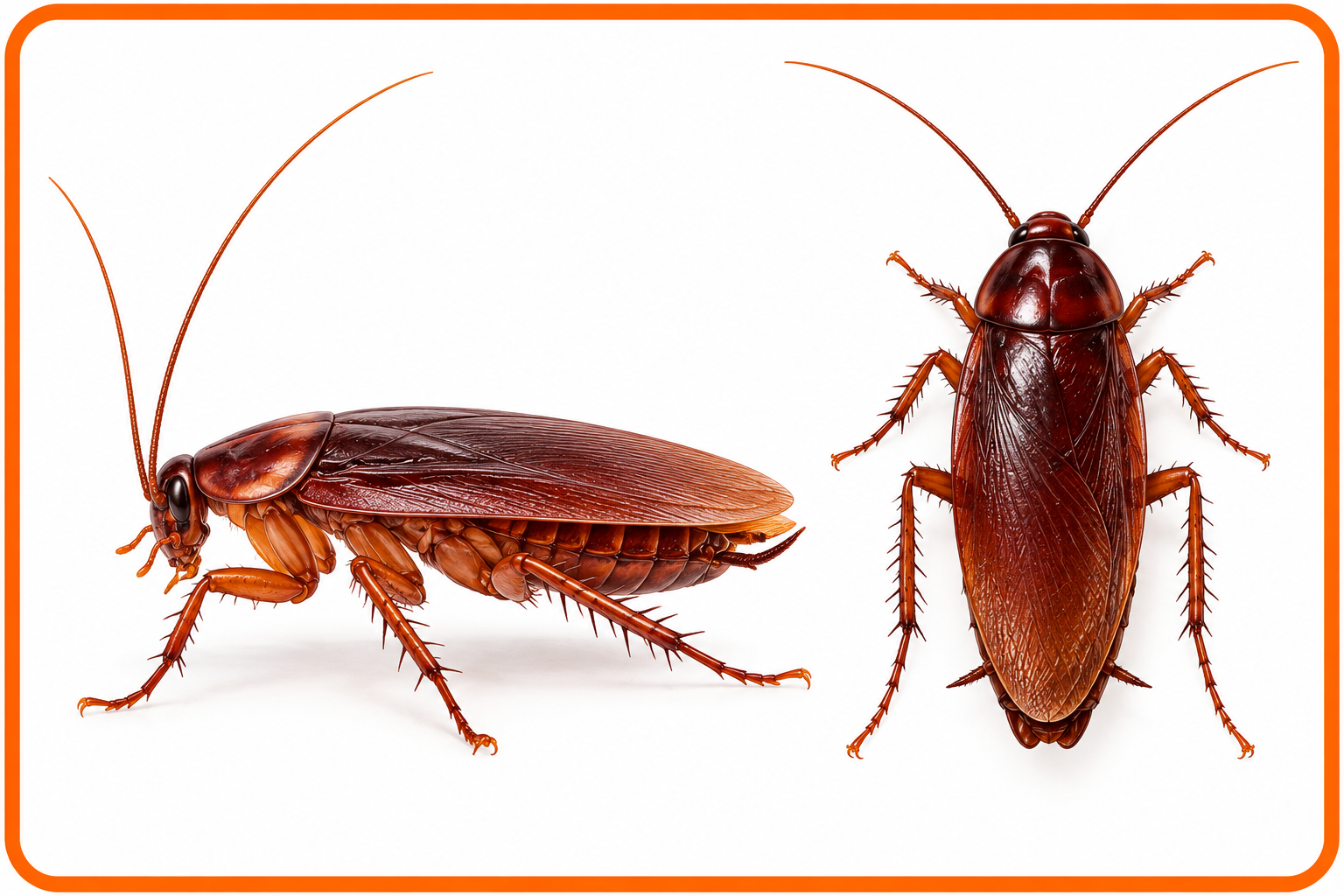
Larger and more uniformly dark brown as an adult, without the German roach’s two dark stripes.
Click here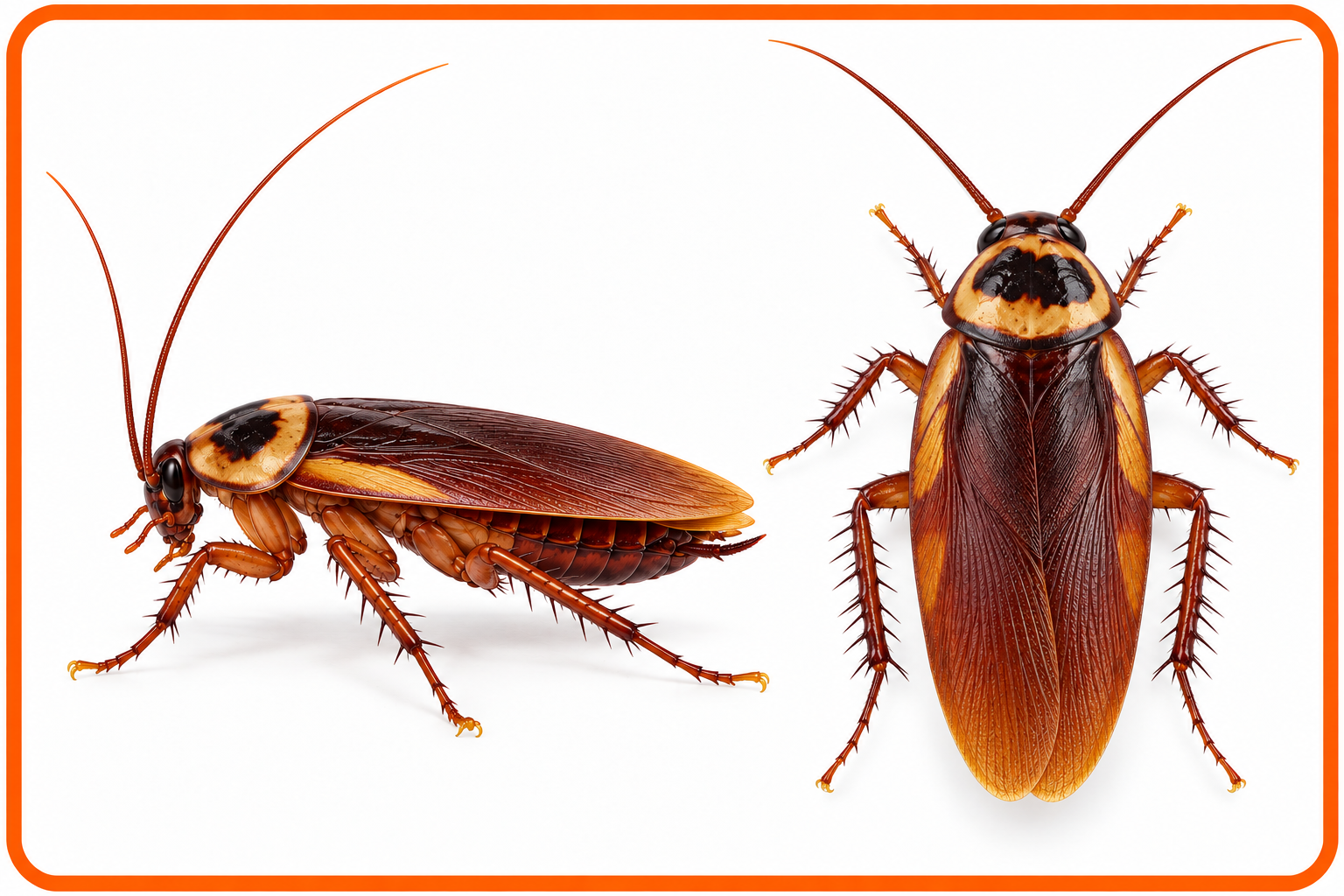
Larger, with pale yellow markings around the shield behind the head and along the outer forewing edges.
Click hereTell us what you’re seeing. We’ll help determine the next step.