
Large ants on walls or trees
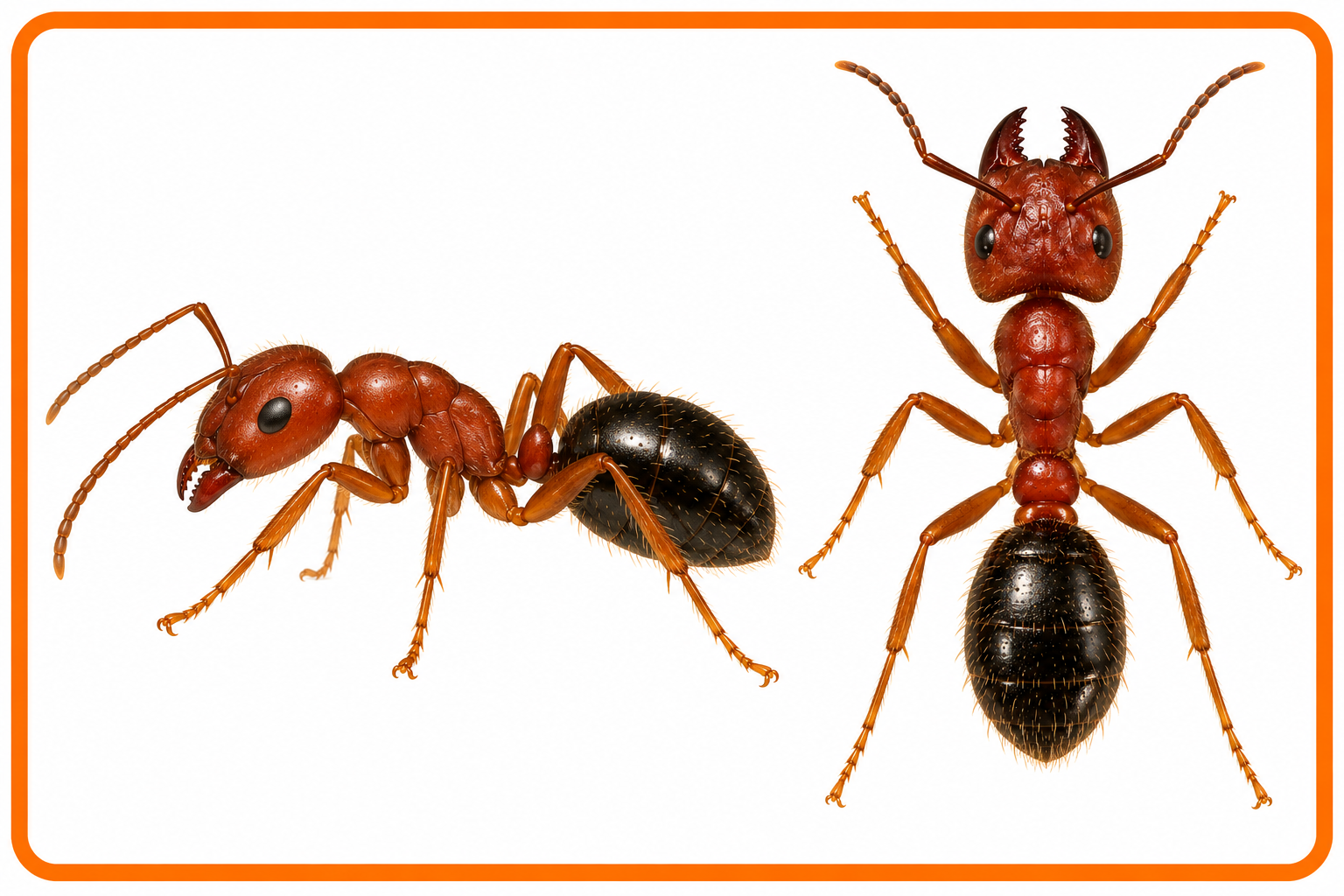
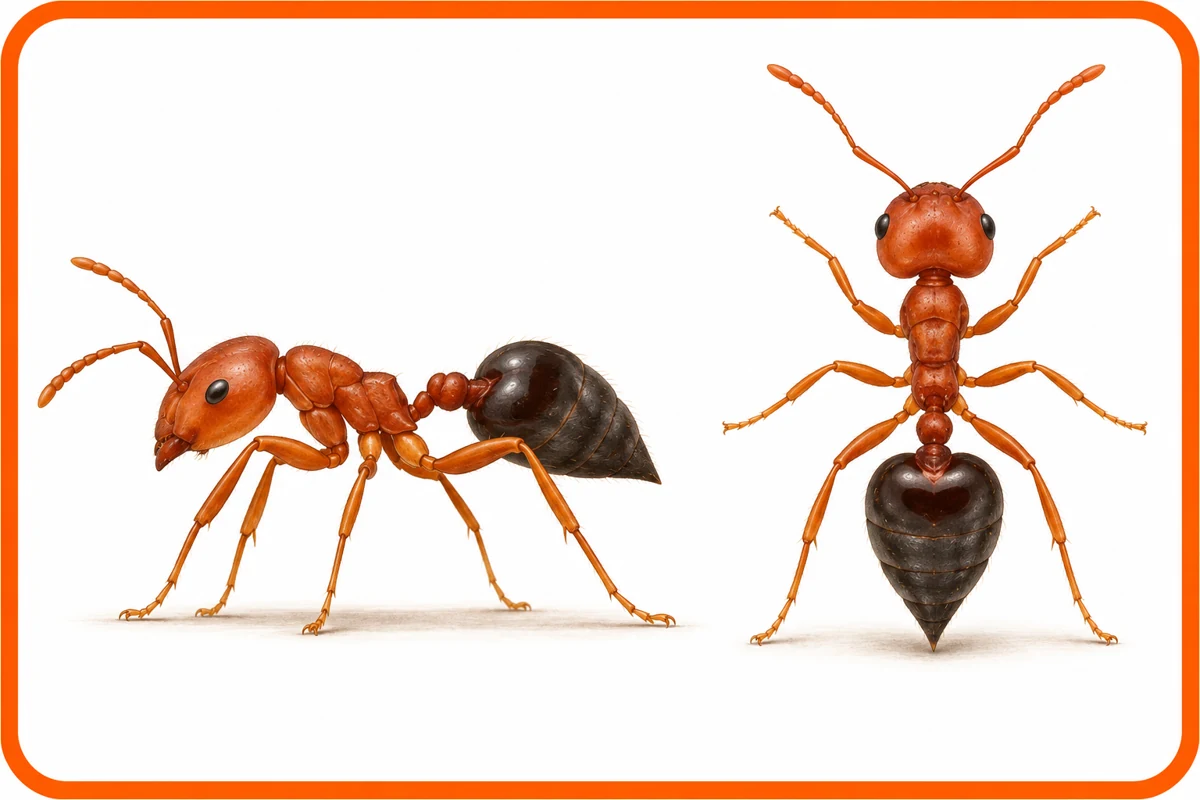
Carpenter Ant Red-and-Black
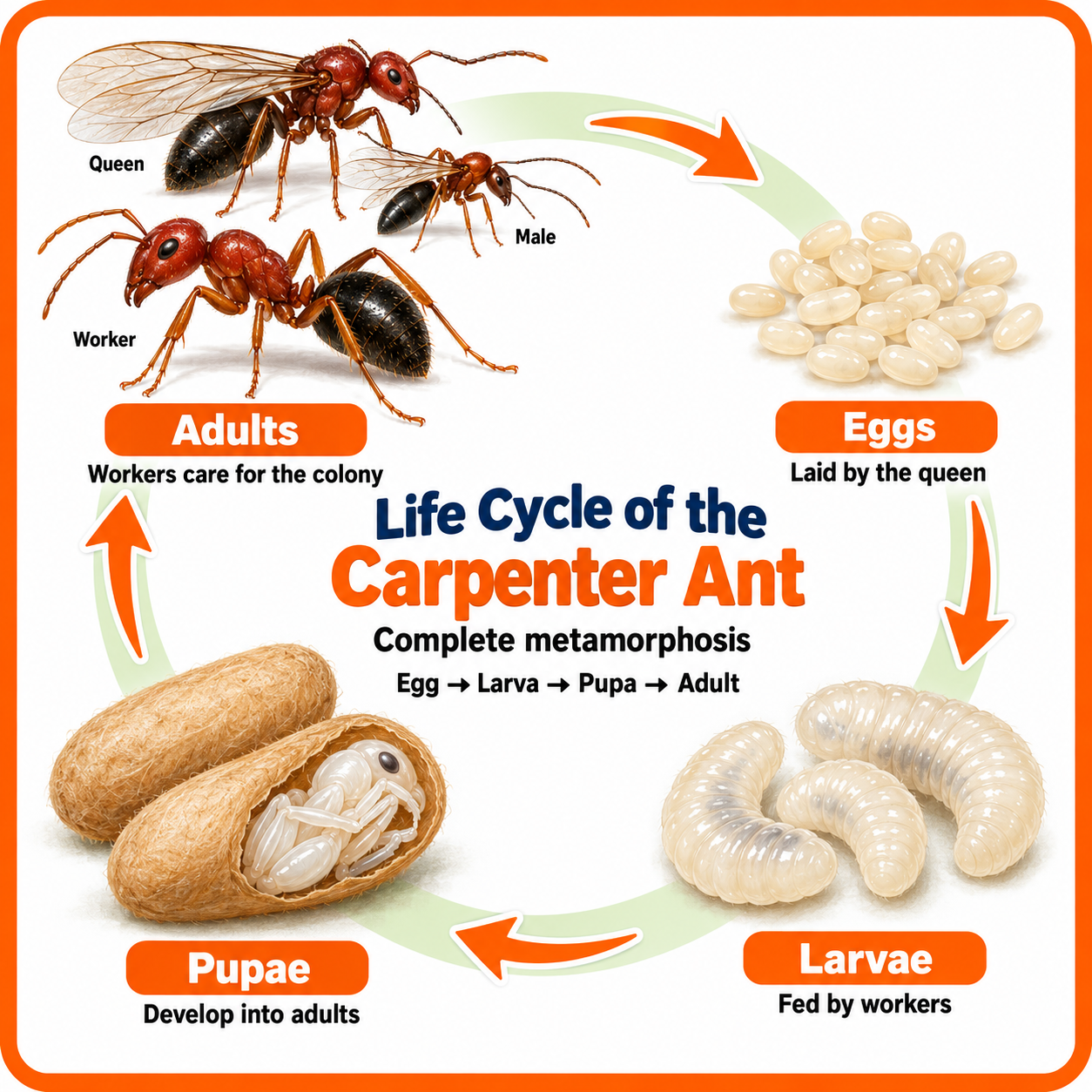
Life Cycle
- Color
- Red and black coloration
- Size
- Workers often about 5.5–11 mm
- Key Markings
- Large workers, elbowed antennae
- Activity
- Often noticed after dark
- Common Areas
- Trees, rooflines, sheltered voids
Description
Camponotus spp.
Florida carpenter ants are large ants that use protected spaces for nesting. They do not eat wood. Florida species commonly use existing cavities or soft, damaged material, and their feeding includes insects and sweet liquids. Worker size and coloration vary, so a close identification is useful.
Ants develop through complete metamorphosis: egg, larva, pupa, and adult. Workers support the developing colony; visible foragers are only part of it.
What Attracts Them?
- Damp or deteriorated nesting materials
- Honeydew and insect prey
- Sheltered cavities near the home
How Do They Get Inside?
- Branches bridging to rooflines
- Gaps around utility connections
- Openings into structural voids
Signs of an Infestation
Trails along rooflines
Workers emerging from cavities
Winged ants near a nesting area
How Serious or Harmful Are They?
Their presence warrants checking nesting sites and moisture conditions. Red-and-black color alone does not establish the exact species or prove structural damage.
Treatment / How to Get Rid of Them
What You Can Do
- Correct moisture problems
- Keep branches clear of the home
- Inspect damaged wood and sheltered voids
- Track activity locations for the inspection
How Pest Guys Helps
Assess — We inspect your property, identify pests and activity, locate nesting and hiding areas, and find contributing conditions.
Communicate — We explain our findings, discuss the recommended plan, answer your questions, and confirm understanding and agreement.
Treat — We put the agreed plan into action, perform the initial treatment, provide ongoing service, and monitor results to adjust as needed.
Frequently Asked Questions
What should I look for first?
Large workers, elbowed antennae. Large ants on walls or trees. A clear photograph and the location of activity can help with identification.
What conditions should I check?
Start with damp or deteriorated nesting materials. Correct moisture problems.
Does seeing one mean there is an infestation?
A single sighting does not establish the extent of a problem. Repeated activity, developing young, nests, or other evidence help us determine what is happening.
How does Pest Guys decide what to do?
We use A-C-T: Assess, Communicate, Treat. The pest, its location, and the conditions at your home guide the recommendation. We explain the plan and any preparation needed before service.
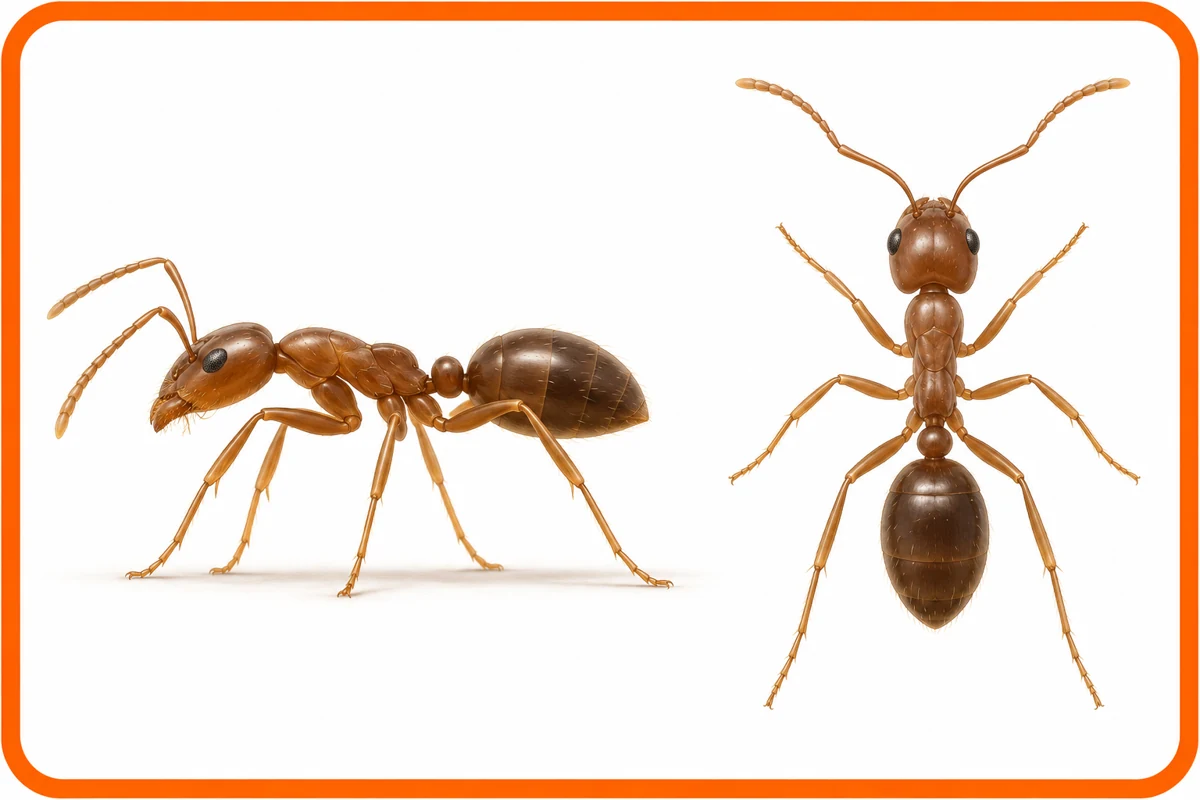
Comparisons With Similar Pests
Need help identifying a pest?
Tell us what you’re seeing. We’ll help determine the next step.