
Irregular webs in protected places
Black Widow Spider
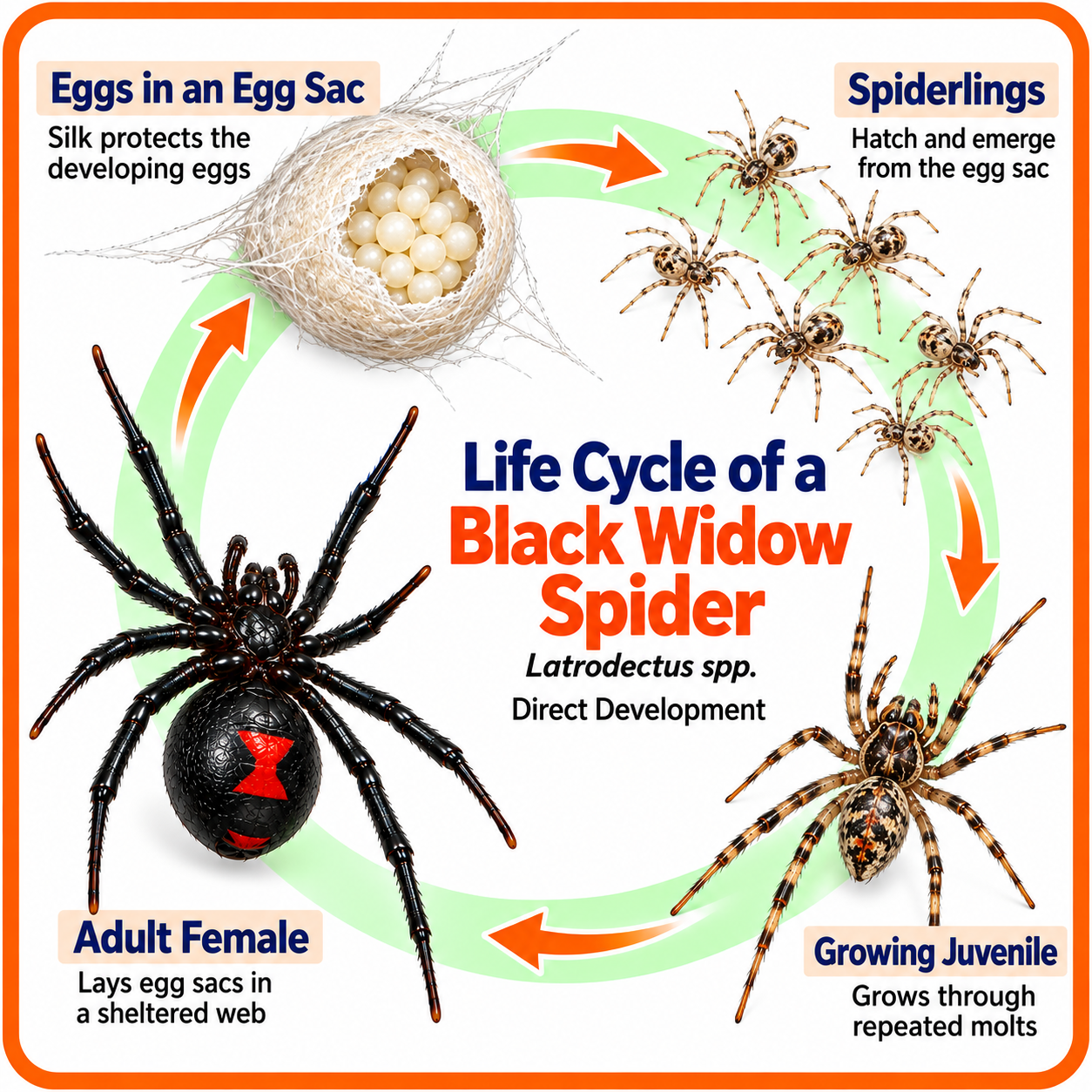
Life Cycle
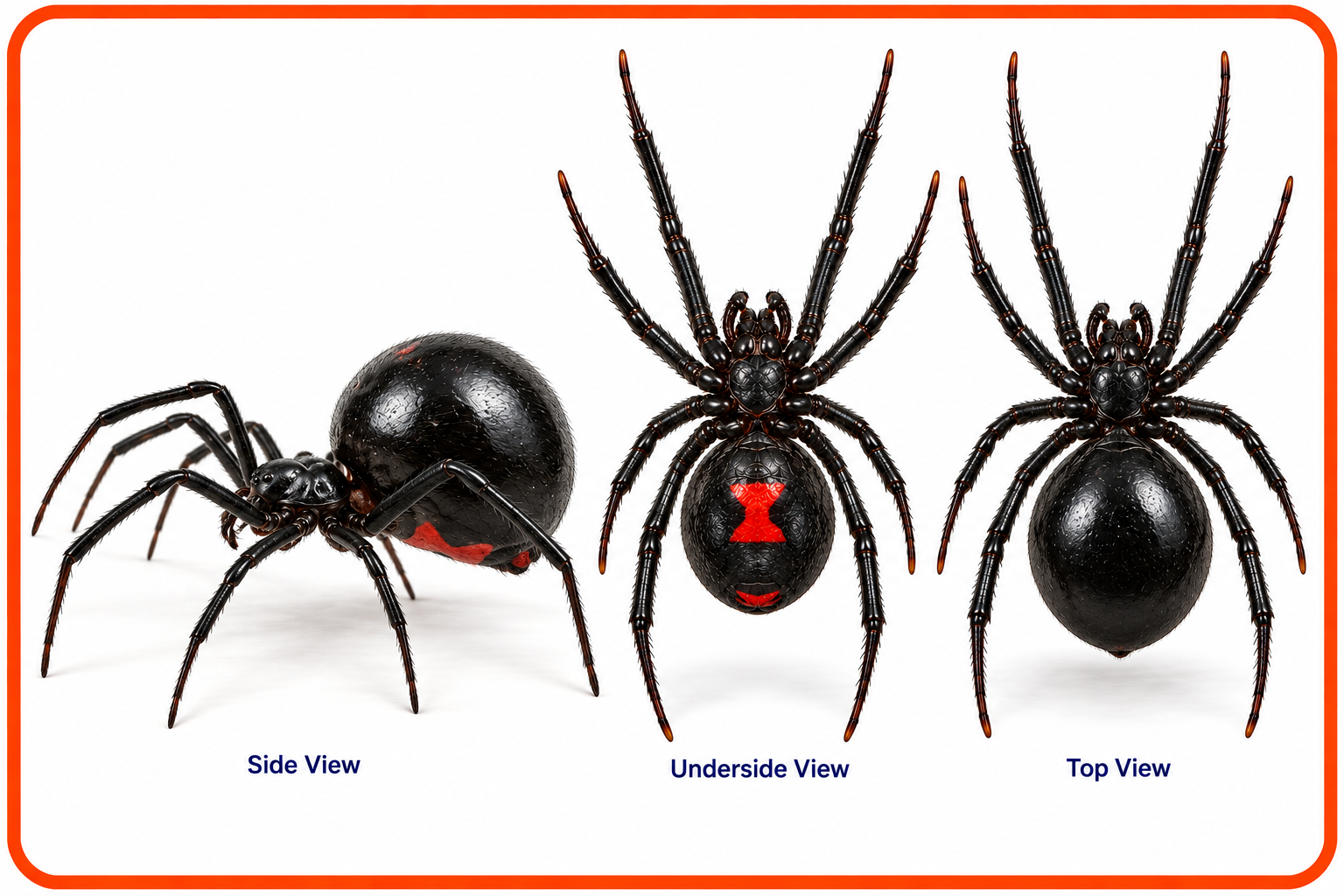
- Color
- Adult females often glossy black
- Size
- Body size varies by species and sex
- Key Markings
- Red underside marking in many females
- Activity
- Often active in sheltered webs
- Common Areas
- Sheds, garages, protected clutter
Description
Latrodectus spp.
Black widows build irregular webs in quiet, protected locations. Mature females often have a rounded abdomen and a red underside marking; juveniles and males can look different. Several widow species occur in Florida. Eggs are enclosed in silk sacs and spiderlings develop through molts.
Spiders develop from eggs to spiderlings and adults through repeated molts. They do not pass through insect larval or pupal stages.
What Attracts Them?
- Undisturbed shelter
- Insect prey
- Clutter and protected voids
How Do They Get Inside?
- Stored outdoor materials
- Gaps into sheltered areas
- Openings around doors and utilities
Signs of an Infestation
Rounded spiders hanging in webs
Silk egg sacs near harborage
Activity around rarely moved objects
How Serious or Harmful Are They?
Widow venom is medically significant. Do not handle a suspected widow or disturb its web. Seek medical care if a widow bite is suspected.
Treatment / How to Get Rid of Them
What You Can Do
- Keep people and pets away from suspect webs
- Wear gloves when moving stored materials
- Reduce clutter without reaching blindly
- Arrange identification and appropriate management
How Pest Guys Helps

Assess — We inspect your property, identify pests and activity, locate nesting and hiding areas, and find contributing conditions.
Communicate — We explain our findings, discuss the recommended plan, answer your questions, and confirm understanding and agreement.
Treat — We put the agreed plan into action, perform the initial treatment, provide ongoing service, and monitor results to adjust as needed.
Frequently Asked Questions
What should I look for first?
Red underside marking in many females. Irregular webs in protected places. A clear photograph and the location of activity can help with identification.
What conditions should I check?
Start with undisturbed shelter. Keep people and pets away from suspect webs.
Does seeing one mean there is an infestation?
A single sighting does not establish the extent of a problem. Repeated activity, developing young, nests, or other evidence help us determine what is happening.
How does Pest Guys decide what to do?
We use A-C-T: Assess, Communicate, Treat. The pest, its location, and the conditions at your home guide the recommendation. We explain the plan and any preparation needed before service.
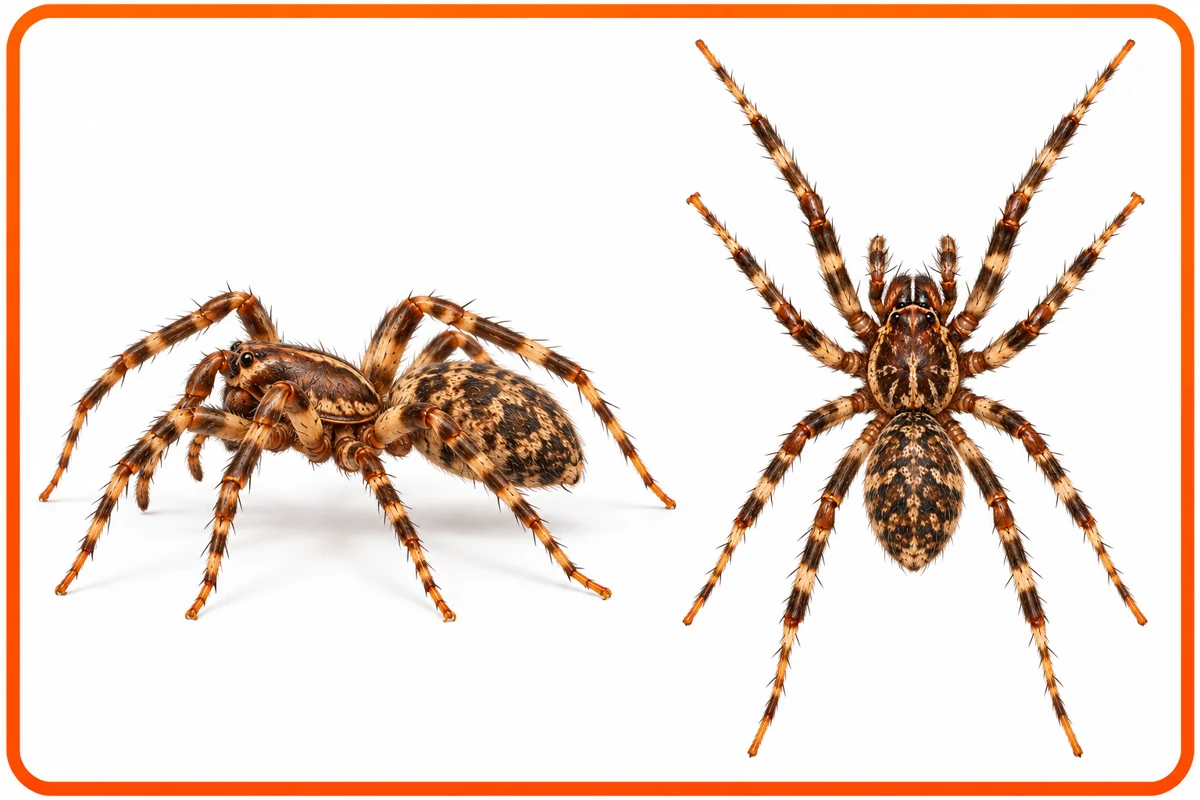
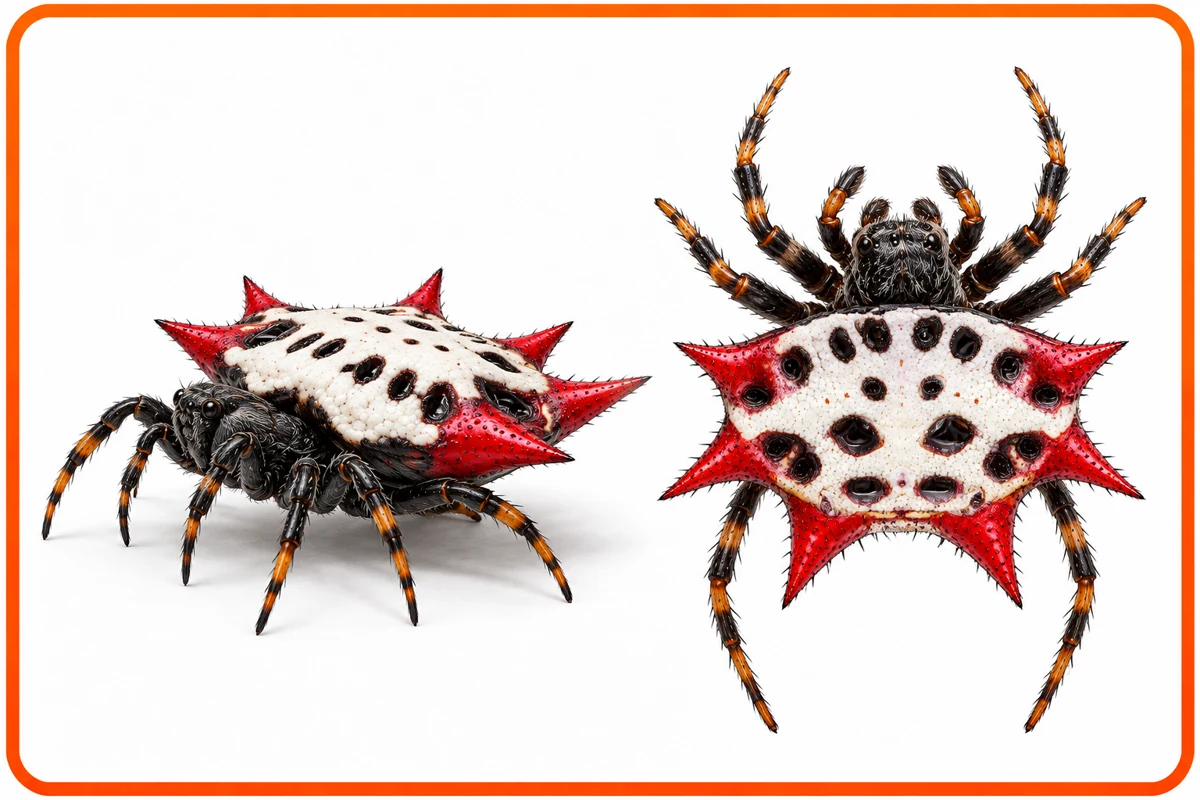
Comparisons With Similar Pests
Need help identifying a pest?
Tell us what you’re seeing. We’ll help determine the next step.